Visiting Loved Ones: Catholic Cemetery Etiquette and Traditions of Remembrance
Visiting the cemetery is one of the most personal ways Catholics honor the dead and live out their faith. Each visit is a way to stay connected with loved ones and to express belief in the promise of eternal life.
The Church encourages visits as part of ongoing spiritual care for the deceased, especially during seasons of prayer such as All Souls’ Day. Through flowers, prayer and reflection, families affirm that those who have gone before us remain part of the Communion of Saints. These traditions of remembrance are expressions of hope and respect. They also teach reverence to younger generations, showing that faith continues even in moments of loss.
This guide explains Catholic customs of visiting the cemetery, from prayer and decorum to seasonal observances and how these practices help families live their faith with love and intention.
Jump to Section:
- The Meaning of a Cemetery Visit
- Catholic Etiquette in Sacred Spaces
- Traditions of Prayer and Remembrance
- All Souls’ Day and the Season of Remembrance
- Flowers, Symbols and Decorations
- Bringing Children and Teaching Reverence
- Memorial Traditions at Mission San Luis Rey Cemetery
- Frequently Asked Questions
The Meaning of a Cemetery Visit
A visit to cemetery is both an act of faith and a gesture of love. It affirms the belief that life continues in Christ and that those who have died remain part of the Church through prayer. Cemeteries are sacred places set apart for rest and remembrance, and every visit there is a form of prayerful connection with those who have gone before us.
In Catholic teaching, visiting a grave is a work of mercy. It reflects the conviction that the faithful departed still benefit from our prayers and that hope in the Resurrection extends beyond the grave. These visits also remind the living of their own faith journey and the promise that death is not separation, but transformation into new life with God.
For many families, the cemetery becomes a place of reflection, a setting where gratitude and remembrance come together. Time spent there renews trust in God’s mercy and keeps family traditions of faith alive across generations.
Catholic Etiquette in Sacred Spaces
Catholic cemeteries are places of prayer and reverence, and behavior within them should reflect that sacred character. Each visitor shares the responsibility to preserve the atmosphere of respect that defines consecrated ground.
Visitors are encouraged to speak softly, dress modestly and move carefully among the graves. Walking directly over burial sites should be avoided whenever possible. Phones and electronic devices should remain silent, and any photography or filming should be discreet and respectful of other families.
Flowers and small devotional items may be placed according to cemetery policy. Artificial decorations or objects that distract from the setting are generally discouraged. When visiting with children, families can help them understand that this is a place of peace, not play and that every marker represents a person remembered and prayed for.
Acts of courtesy such as yielding to funeral processions, keeping walkways clear and leaving the grounds as they were found, show reverence for both the living and the dead. Observing these customs turns every visit into an expression of faith and respect.
Traditions of Prayer and Remembrance
Prayer at the cemetery is one of the most enduring Catholic customs. It reflects faith in the Resurrection and expresses care for those who have died. The Church teaches that praying for the deceased is an act of mercy, and many families include it as part of their regular devotion.
A visit often begins with the Sign of the Cross, followed by a moment of silence or a short prayer such as Eternal rest grant unto them, O Lord, and let perpetual light shine upon them. Some families pray the Rosary together, while others bring holy water to bless the grave. These gestures remind the living that every soul remains connected through God’s love.
Lighting candles or placing small devotional items may be allowed in certain cemeteries, though families should always follow local policy. The focus of these customs is prayer rather than display. Even a few minutes spent in reflection or gratitude transforms an ordinary visit into a spiritual act of remembrance.
Catholic families often return to the cemetery during specific times of the year, such as All Souls’ Day, anniversaries or the week after Easter, when the Church prays in a special way for the faithful departed. These traditions strengthen both faith and family bonds, showing that remembrance is not limited to one season but continues throughout the year.
All Souls’ Day and the Season of Remembrance
All Souls’ Day, observed each year on November 2, is one of the most meaningful dates in the Catholic calendar. On this day, the Church prays for all who have died, especially those still awaiting the fullness of God’s mercy. Visiting the cemetery during this time reflects the belief that love continues beyond death and that prayer can assist the souls of the faithful departed.
Many Catholics mark the day by attending Mass, lighting candles or visiting the graves of relatives and friends. Families often bring flowers, recite the Rosary or pray the Eternal Rest prayer at each gravesite.
The week surrounding All Souls’ Day is also a traditional time for remembrance. In many communities, parish groups or families visit cemeteries together to pray for all who are buried there, not only their own loved ones. The Church grants indulgences to those who visit a cemetery and pray for the dead during this period, strengthening the connection between devotion and mercy.
This season of remembrance encourages Catholics to see the cemetery as a place of hope rather than loss. Through prayer, flowers and acts of reflection, families participate in a long tradition that joins past, present and future in faith.
Flowers, Symbols and Decorations
Bringing flowers to a cemetery is a gesture of respect that has deep roots in Catholic tradition. Fresh flowers represent the beauty of creation and the hope of new life promised in the Resurrection.
Most Catholic cemeteries welcome flowers and small devotional items such as crosses or rosaries. Families are encouraged to follow posted guidelines so that the grounds remain orderly and safe.
Common considerations when placing decorations:
- Use fresh or seasonal flowers whenever possible.
- Avoid glass containers or oversized arrangements.
- Confirm with the cemetery which items are permitted in each section.
- Replace or remove wilted flowers during future visits.
Seasonal visits often include particular symbols:
- November: chrysanthemums, symbols of endurance and remembrance.
- Easter: lilies, representing new life and the Resurrection.
- Anniversaries: favorite flowers of the person being remembered.
The Church encourages these gestures when they inspire prayer and reflection. In some cemeteries, vigil lights or candles are permitted for short periods, especially during All Souls’ week. Every decoration, no matter how simple, carries meaning when chosen with reverence and placed in the spirit of prayer.
Bringing Children and Teaching Reverence
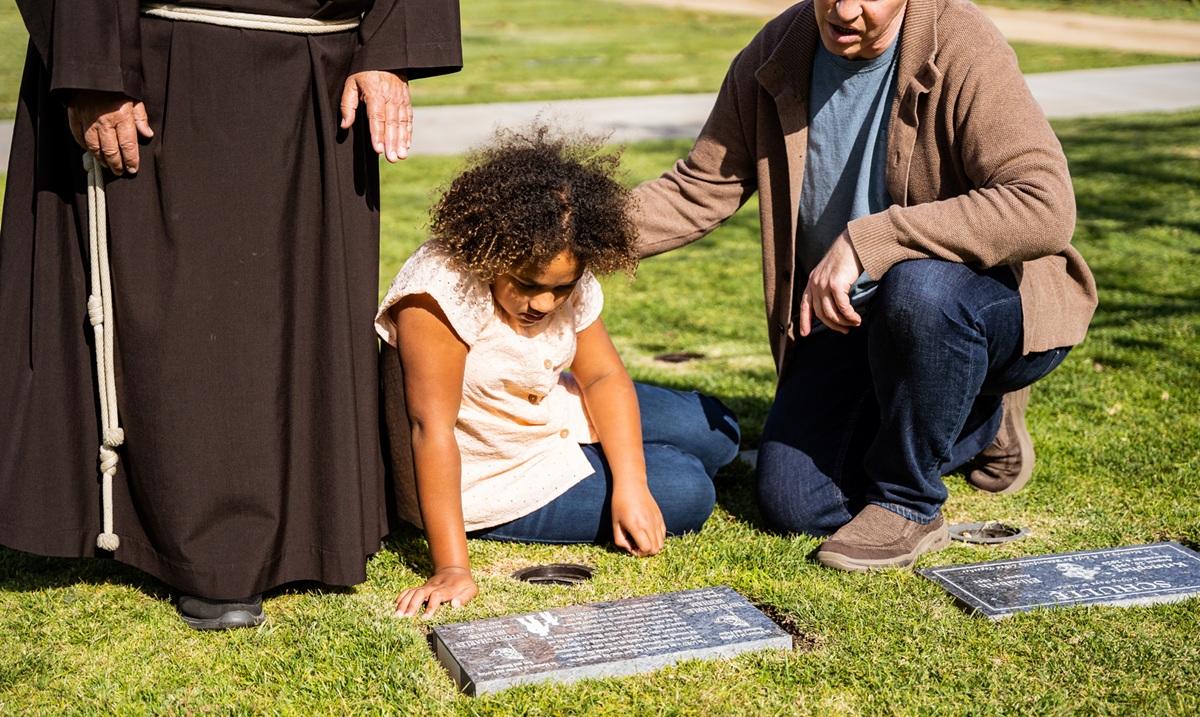
Visiting a cemetery with children helps them understand that faith extends beyond this life. Early experiences of prayer and respect at a gravesite can shape how they view loss, remembrance and hope. The goal is not to create sadness but to show that Christian remembrance is rooted in love and trust in God’s promise of eternal life.
Parents and grandparents can prepare children by explaining where they are going and why. A short talk before the visit helps them know what behavior is expected and what the visit means. Simple prayers, such as the Our Father or Hail Mary, can make the experience familiar and comforting.
Ways to help children participate respectfully:
- Encourage them to place a flower or small cross at the grave.
- Invite them to say a prayer aloud or quietly in their own words.
- Explain symbols they see, such as crosses or angels, in simple terms.
- Keep the visit short and focused so attention remains on prayer and remembrance.
When children see adults praying and treating sacred space with care, they learn that remembrance is part of Catholic life and that those who have died remain part of the family through prayer.
Memorial Traditions at Mission San Luis Rey Cemetery
The cemetery at Mission San Luis Rey has long been a place where faith and remembrance come together. Generations of families have gathered here to pray and visit the graves of relatives who rest within its historic grounds. The setting beside the Mission Church creates a natural connection between prayer for the dead and the ongoing life of the parish community.
Many visitors come during All Souls’ season to take part in the Mission’s annual blessing of graves and community prayers. Others return throughout the year to maintain family memorials, attend Mass or spend a few moments in personal reflection. The Franciscan tradition of hospitality is evident in the way the cemetery welcomes all who seek peace, regardless of background or language.
Families seeking information about burial sections, memorial updates or future arrangements can contact the cemetery staff for guidance. Assistance is available in English and Spanish. To learn more or reach the office directly, visit the cemetery page or call (760) 231-8445.
Frequently Asked Questions
Practices and guidelines may vary among Catholic cemeteries. For current policies or questions about visitation, please contact the Mission San Luis Rey Cemetery office directly.
Related Reading
- What Makes a Cemetery Sacred
Learn how consecrated ground is blessed and why it remains a place of prayer for generations. - Family Plots vs. Individual Burial: How to Choose
Explore the differences between family plots and single graves and how families plan for future generations. - Memorial Markers and Headstone Traditions in Catholic Cemeteries
Understand the meaning behind Catholic symbols, inscriptions and monument designs. - Burial Traditions in Hispanic Families
See how cultural traditions such as rosaries, novenas and bilingual services honor faith and family heritage. - Funeral Pre-Planning Benefits
Discover the emotional, financial and spiritual value of making arrangements in advance. - Non-Catholics Buried in a Catholic Cemetery
Find out how Catholic cemeteries welcome all people of goodwill while maintaining sacred tradition.