Catholic Burial Traditions in Hispanic Families of California
Headstones and memorial markers serve both a practical and spiritual purpose in Catholic burial tradition. They identify the resting place of each person and reflect the Church’s enduring belief in the dignity of every human life. For Catholics, the memorial is a visible expression of faith in the Resurrection and the promise of eternal life.
A well-designed headstone becomes a point of connection between generations. Families return to these markers to pray, leave flowers or recall moments shared with their loved ones. Through names, dates and carefully chosen symbols, the headstone preserves a story and affirms that the person continues to be remembered within the communion of the Church.
Catholic cemeteries treat every memorial as part of sacred ground. Because the burial site is blessed and dedicated to prayer, the design of each headstone follows standards of reverence, simplicity and harmony. Decoration is not the goal; rather, the memorial serves as a witness to faith and a place where the living may pause in reflection and prayer.
Jump to Section:
Catholic cemeteries across the country uphold these same values, and the historic Mission San Luis Rey continues them today through its respectful care of sacred memorials and the families who visit in prayer.
This article explains how Catholic teaching shapes the use of memorial markers and monuments. It covers common headstone types, the meaning of symbols and inscriptions, and the principles that guide families in choosing designs that honor both personal devotion and Church tradition.
The Purpose of Headstones in Catholic Tradition
In Catholic teaching, the act of marking a grave is both practical and spiritual. A headstone identifies where a person rests, but it also serves as a visible expression of faith in the Resurrection.
The Church views burial and commemoration as works of mercy, ways the living show respect for the body, which was once a temple of the Holy Spirit, and express hope in eternal life.
A memorial reminds visitors to pray for the deceased and to reflect on their own faith journey. It also creates a place of belonging, where family and community can gather in remembrance. The presence of a name and a cross invites prayer and reaffirms that life continues in God’s care beyond death.
Catholic cemeteries set standards for memorials to preserve both beauty and order.
These guidelines protect the harmony of sacred space, prevent the use of secular imagery, and ensure that every grave reflects dignity and respect.
Headstones stand as a sign of faith, reminding visitors of Christian hope and the promise of life after death.
Common Types of Memorial Markers
Catholic cemeteries use several types of memorials, each designed to express respect, permanence and unity within sacred grounds.
Flat Markers
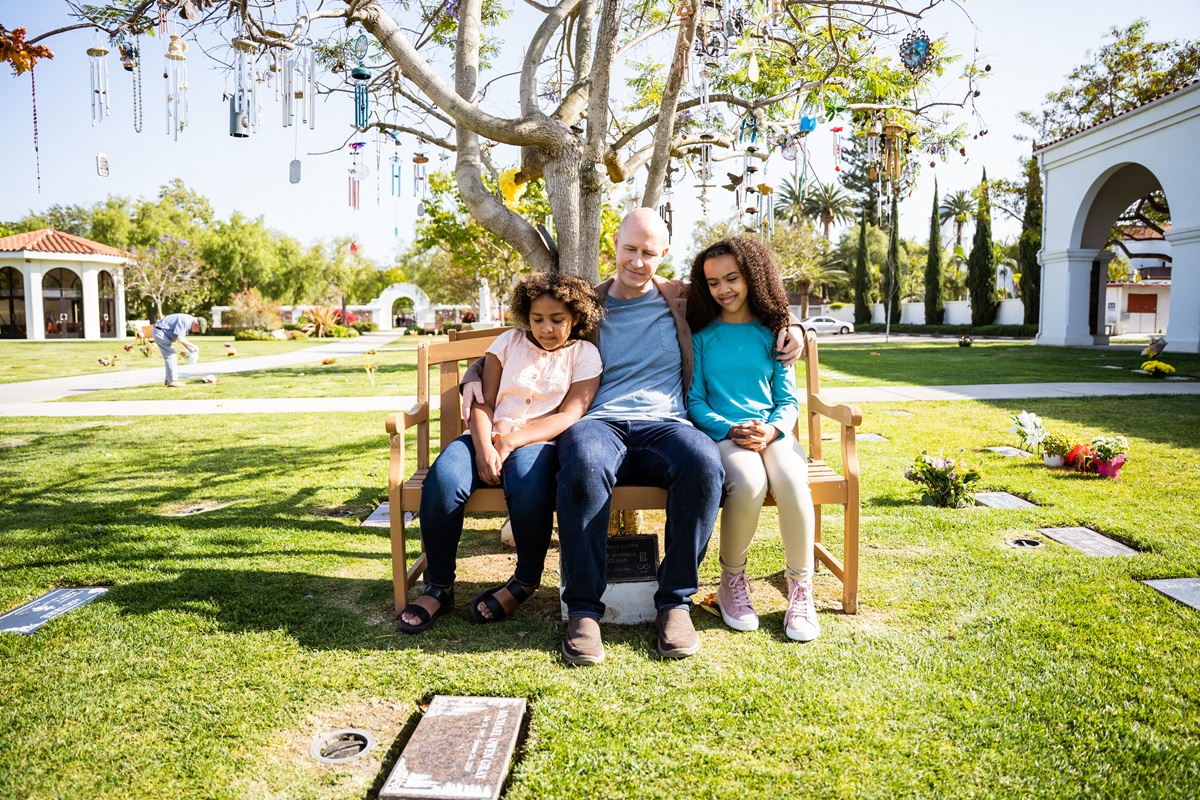
Flat markers, sometimes called flush markers, are set level with the ground. They are often made of bronze or granite and engraved with the person’s name, birth and death dates and a cross or brief inscription. These markers create a uniform appearance across the section and allow easy maintenance of the grounds.
Upright Headstones
Upright headstones, also known as monuments, rise above the ground and are the most traditional form of memorial. They typically include a family name and space for individual inscriptions. The design may feature simple religious symbols such as a cross, praying hands or a small saint image. This type of marker is common in older Catholic cemeteries and family plots where several relatives are buried together.
Family Monuments
Family monuments identify a group of adjoining graves belonging to one family. The main monument often carries the family name, while smaller markers note the names and dates of individual relatives. This arrangement allows a shared memorial design that reflects unity and heritage within the faith.
Mausoleum and Niche Inscriptions
In mausoleums or columbarium walls, inscriptions are engraved directly onto the crypt or niche front, often in bronze or granite. These inscriptions usually include the same elements as traditional headstones - name, dates and a cross or short phrase of prayer.
Special Memorial Sections
Many Catholic cemeteries include dedicated areas for veterans, infants or clergy. Markers in these sections follow specific guidelines set by the Church or military services to ensure consistency and respect for each group.
Families planning a memorial are encouraged to confirm local cemetery policies before choosing a design or material. This helps maintain visual harmony and honors the shared sacred nature of the grounds.
Catholic Symbols and Their Meanings
Religious symbols on headstones reflect the faith of the person buried and the hope shared by those who visit. Each emblem carries meaning drawn from scripture and centuries of Catholic devotion. The Church encourages sacred imagery that inspires prayer and communicates belief in Christ’s victory over death.
Common Catholic Symbols
- The Cross - The most widely used Christian symbol, representing salvation and the promise of resurrection.
- The Crucifix - Shows Christ on the cross and emphasizes His sacrifice and mercy.
- The IHS or Chi-Rho Monogram - Early Christian abbreviations for the name of Jesus, often placed at the top of the headstone.
- Saint Images - Chosen to reflect the patron saint or personal devotion of the deceased.
- Angels - Symbols of guidance, guardianship and the soul’s journey to God.
- Roses and Lilies - Refer to purity, Mary’s intercession and new life.
- The Bible or Open Book - Represents God’s Word and the belief that the person’s name is written in the Book of Life.
Catholic cemeteries approve designs that reflect reverence and faith. Secular or decorative symbols that do not express Christian belief are generally not permitted. Families may consult cemetery staff when selecting symbols to confirm that their design follows these spiritual and artistic guidelines.
Inscriptions and Scripture Verses
The words engraved on a headstone serve as both identification and testimony. Catholic cemeteries encourage inscriptions that express faith, gratitude and remembrance in a concise and reverent way.
Essential Information
Most headstones include the person’s full name, dates of birth and death, and a simple cross or phrase such as Rest in Peace. Some families also include a short line identifying a family role, such as Beloved Father and Grandfather.
Faith-Based Inscriptions
Brief prayers or phrases of hope are often used to express belief in eternal life. Common examples include:
- Eternal Rest Grant Unto Them, O Lord
- Forever with the Lord
- In God’s Care
- Peace Be with You
Scripture Verses
Many families choose a single verse that reflects the person’s faith or life. Popular selections include:
- John 11:25 — “I am the resurrection and the life.”
- Psalm 23 — “The Lord is my shepherd; I shall not want.”
- Philippians 1:3 — “I thank my God every time I remember you.”
- Romans 14:8 — “Whether we live or die, we are the Lord’s.”
Language and Personalization
In communities where families speak more than one language, inscriptions may appear in both English and Spanish. This bilingual approach honors heritage while remaining faithful to Catholic tradition.
When adding personal notes or quotations, it is recommended to keep them brief and respectful, so the message remains clear and legible. Before finalizing an inscription, families can ask the cemetery office to confirm that the text aligns with local design standards and Catholic values.
Artistic Style and Material Choices
Headstones in Catholic cemeteries are created to last and to harmonize with their surroundings. While personal taste and family heritage influence design, all memorials are expected to reflect simplicity, durability and reverence.
Materials
- Granite is the most common material used today because of its strength and ability to retain inscriptions for generations.
- Bronze is also widely used, particularly for flat markers and mausoleum plates, where its smooth surface allows clear lettering.
- Some older cemeteries include marble or limestone memorials, though these are less common now due to weathering over time.
Families selecting materials should consider long-term maintenance and how the color and texture will appear in natural light. Cemetery staff can advise on approved options that meet both visual and structural standards.
Design and Proportion
Catholic cemeteries encourage designs that are stable, balanced and consistent within each section. Headstones are reviewed to ensure appropriate height, shape and base structure for safety and visual unity. The design may include a modest relief carving or etched symbol, but ornate decoration is generally discouraged in favor of understated beauty.
Craftsmanship and Lettering
The engraving or bronze casting must be legible, with lettering deep enough to remain readable for many years.
Families may choose serif or block-style fonts depending on the monument type.
Script or decorative fonts can be used sparingly if readability is maintained.
Design Approval
Before ordering a monument, most Catholic cemeteries require a review of design drawings and dimensions. This process confirms that the proposed memorial meets cemetery standards for size, material and symbolism. Following this step helps avoid costly changes later and ensures that the final headstone fits the sacred setting appropriately.
Care and Perpetual Maintenance
Long after a burial takes place, the care of memorials continues as part of the cemetery’s ministry. Cemeteries operate under the principle of perpetual maintenance, which means the grounds and memorials are preserved as sacred places of prayer and reflection for generations to come.
Ongoing Maintenance
The perpetual care program typically covers the upkeep of lawns, trees, roads and shared areas, as well as the general condition of headstones and markers.
Families may visit to clean the surface of their loved one’s memorial or place flowers according to cemetery guidelines, while the staff maintains the overall appearance of the section.
Family Responsibility
Although perpetual care supports long-term preservation, families still play a part in maintaining the memorial’s personal character. Cleaning with non-abrasive materials, removing weathered flowers and reporting any needed repairs help keep the area safe and respectful.
Respect for Sacred Space
Decorations or additions such as vases or vigil lights are generally allowed if they meet cemetery policy. Seasonal items may be removed during routine grounds maintenance to preserve the visual order and safety of the area. These guidelines ensure that every memorial remains consistent with the dignity of the cemetery as a place of prayer.
Memorial Guidance at Mission San Luis Rey Cemetery
The historic Mission San Luis Rey Cemetery continues the Catholic tradition of reverent memorial care that has shaped its ministry for more than two centuries. Families planning new markers or updating existing ones can receive guidance on design, materials and inscriptions that follow Church standards while reflecting personal devotion.
Staff members review design drawings, confirm inscription wording, and coordinate with approved monument providers to ensure every memorial placed on the property is durable, respectful, and consistent with the sacred setting of the Mission. Spanish-speaking assistance is available for families who prefer to plan in their native language.
For more information, visit the Mission San Luis Rey Cemetery page to learn about available sections or explore the Funeral Pre-Planning for additional resources. To reach the cemetery staff directly, call (760) 231-8445 or contact the Cemetery Office for personal assistance.