
Family Plots vs. Individual Burial: How to Choose
Choosing a final resting place is one of the most lasting family decisions a person can make. At Old Mission San Luis Rey Cemetery, families often ask whether a family plot or an individual burial space is the better choice. The right option depends on how you wish to honor loved ones, preserve heritage and plan for future generations.
This guide explains the differences, advantages and practical points to consider before meeting with the cemetery staff or beginning funeral pre-planning.
Table of Contents:
- Two Approaches to Burial
- What Is a Family Plot?
- What Is an Individual Burial Space?
- Legacy and Continuity Considerations
- Cost Models and Long-Term Stewardship
- Practicalities: Rights, Deeds and Future Access
- Design and Memorialization Options
- Planning for Changing Family Dynamics
- Catholic Guidelines and Pastoral Considerations
- Family Plot or Individual Burial — A Quick Comparison
- Questions to Ask Any Catholic Cemetery
- Old Mission San Luis Rey Cemetery - A Place of Faith and Continuity
- Frequently Asked Questions
Two Approaches to Burial
Every Catholic cemetery offers two primary configurations:
- Family plots - several interment spaces grouped under one ownership.
- Individual burial spaces - purchased separately for one person or a pair of companions.
Both are consecrated and permanently maintained under perpetual care. Understanding how each option works helps families plan with confidence and provides peace of mind for generations to come.
What Is a Family Plot?
A family plot is a set of adjoining graves or crypts held under a single ownership record. They may be arranged side by side in ground sections or vertically within a mausoleum. Most include a shared monument bearing the family name with smaller markers for each individual.
Key Features of a Family Plot
- Multiple interments allowed under one deed
- Shared monument or memorial for consistent design
- Space for future generations within the same section
- Potential long-term savings compared with purchasing plots individually
Families often choose this arrangement to maintain continuity and simplify future decisions. It allows relatives to be remembered together and makes visitation easier during anniversaries or All Souls’ Day.
If you are considering this option, you can review planning steps in the Funeral Pre-Planning Guide.
What Is an Individual Burial Space?
A family plot is a set of adjoining graves or crypts held under a single ownership record. They may be arranged side by side in ground sections or vertically within a mausoleum. Most include a shared monument bearing the family name with smaller markers for each individual.
Typical Characteristics
- One interment per grave with its own monument or marker
- Flexible placement within different cemetery sections
- Lower initial cost and simpler documentation
- Freedom for each household to design its own memorial
Individual plots are ideal when family members live in different regions or when other long-term arrangements exist elsewhere. They can still reflect unity through shared design choices, inscriptions or placement near existing relatives whenever space allows.
Legacy and Continuity Considerations
For many families, choosing a burial space reflects the desire to keep generations connected through memory and faith. Catholic tradition recognizes burial as a work of mercy and a visible expression of hope in the Resurrection. A shared resting place extends that belief into a continuing family story.
Why Families Choose to Be Together
- Easier remembrance and shared visitation
- Continuity of faith and Catholic identity
- Simplified future planning for children or grandchildren
- Unified monument design and family heritage
Mission San Luis Rey Cemetery in Oceanside offers both single and multi-space lots, allowing relatives to rest near one another while maintaining the dignity and reverence of Catholic burial grounds.
Cost Models and Long-Term Stewardship
The cost of burial varies by location, type of interment and the chosen monument or headstone. Understanding what is included helps families see value beyond price.
- Plot or lot type: Single graves, family plots, or mausoleum crypts vary in size and configuration.
- Interment services: Opening and closing of the grave, documentation and care immediately after burial.
- Monument or headstone: Material, design and engraving choices affect the overall cost.
- Perpetual care contribution: A portion of each purchase supports ongoing maintenance of the cemetery’s common areas, roads, and landscaping.
The Value of Pre-Need Planning
Arranging a plot or family section in advance often helps families manage future costs. Pre-need planning locks in current pricing, ensures availability, and allows decisions to be made calmly rather than during a time of grief.
Stewardship and Care
Catholic cemeteries operate under the principle of perpetual care, meaning the grounds remain maintained in perpetuity as sacred places of prayer and remembrance.
Regular landscaping, monument cleaning and structural maintenance are supported by this care program, ensuring that every grave remains treated with dignity for generations to come.
Practicalities: Rights, Deeds and Future Access
Every burial space in a Catholic cemetery carries two components: ownership of the lot and the right of interment. Understanding how these work prevents confusion for later generations and ensures that each person’s wishes are honored properly.
Ownership and Burial Rights
- The person who purchases the lot becomes the deed holder.
- Ownership includes the right to determine who may be buried in that space.
- The deed should list the legal name, contact information and designated successors.
While the land itself remains under the care of the cemetery, the family retains interment rights according to cemetery policy. Keeping clear records - copies of the deed, plot map and purchase documents helps prevent delays when a future burial is needed.
Successor Designation
It is common for the original deed holder to name a family member or executor who will manage burial decisions once they are no longer living. Updating this contact information with the cemetery office ensures future correspondence reaches the right person. This simple step avoids uncertainty and preserves family intentions.
Transfers and Family Updates
If a family moves or changes contact details, they should notify the cemetery office.
Most Catholic cemeteries allow the transfer of burial rights within the same family upon written request, though the exact procedure can vary. Questions about transfers, documentation or future access can always be discussed with the cemetery’s administrative staff.
Design and Memorialization Options
Every burial space in a Catholic cemetery carries two components: ownership of the lot and the right of interment. Understanding how these work prevents confusion for later generations and ensures that each person’s wishes are honored properly.
Marker and Monument Styles
- Flat markers: Stone or bronze plaques set flush with the ground; commonly used in lawn sections for uniform appearance.
- Upright monuments: Vertical headstones placed on a base; often engraved with the family name and cross or saint image.
- Family monuments: Larger structures identifying a group of adjoining graves within a family plot, with individual nameplates or small markers for each person.
- Mausoleum and niche engravings: Bronze or granite inscriptions placed directly on crypt or niche fronts, sometimes with emblems or short scriptural phrases.
Design Guidelines in Catholic Cemeteries
- Religious symbols such as the cross, praying hands, rosaries or depictions of saints are traditionally encouraged.
- Inscriptions often include birth and death dates, a brief prayer (e.g., “Eternal Rest Grant Unto Them”) or a chosen scripture verse.
- Materials and sizes must comply with the cemetery’s approved monument standards to preserve safety and consistency.
- All engraving is reviewed by cemetery staff before installation to ensure readability and adherence to faith-based imagery standards.
Ongoing Memorial Care
Families remain welcome to visit, place flowers and maintain light decorations within the cemetery’s guidelines. Seasonal cleanings and upkeep are handled through perpetual care, ensuring that each memorial remains respectfully maintained year-round.
Planning for Changing Family Dynamics
Family circumstances often change over time. Relocations, marriages, and new generations can influence how burial plans are carried forward. Thoughtful documentation and open communication help preserve unity and avoid uncertainty later.
Anticipating Future Needs
- Discuss burial intentions early with all immediate relatives.
- Keep copies of deeds and contact information with other estate records.
- Review plans every few years, especially after moves or major family events.
Adjusting or Expanding a Family Plot
When families grow or wish to add members later, additional spaces may be available nearby. Most Catholic cemeteries allow adjoining or companion plots to be reserved if arranged in advance.
If the original section has reached capacity, staff can recommend nearby lots that maintain family proximity.
Blended and Extended Families
Modern families sometimes include stepchildren, in-laws or relatives of different faith backgrounds. Cemetery policies generally allow flexibility as long as the plot owner grants written consent and burial is consistent with Catholic respect for the body. Discussing these decisions ahead of time helps future generations understand the intent behind the family’s resting place.
Catholic Guidelines and Pastoral Considerations
Burial in consecrated ground reflects the Catholic belief in the dignity of the human body and the hope of resurrection. Choosing a plot, whether for an individual or a family, places that belief within a sacred, permanent setting that allows prayer and remembrance to continue for generations.
Core Principles of Catholic Burial
- Sacred space: The cemetery is an extension of the Church’s ministry, providing a place for prayer and remembrance of those who have died.
- Respect for the body: Human remains, whether intact or cremated, must rest in blessed ground and never be scattered or kept in private homes.
- Prayer and committal: Burial is accompanied by the Rite of Committal, a short service led by a priest, deacon or lay minister that entrusts the deceased to God’s care.
- Ongoing remembrance: Families are encouraged to visit, pray and participate in memorial Masses or All Souls observances as acts of faith and connection.
Support from Mission San Luis Rey Cemetery
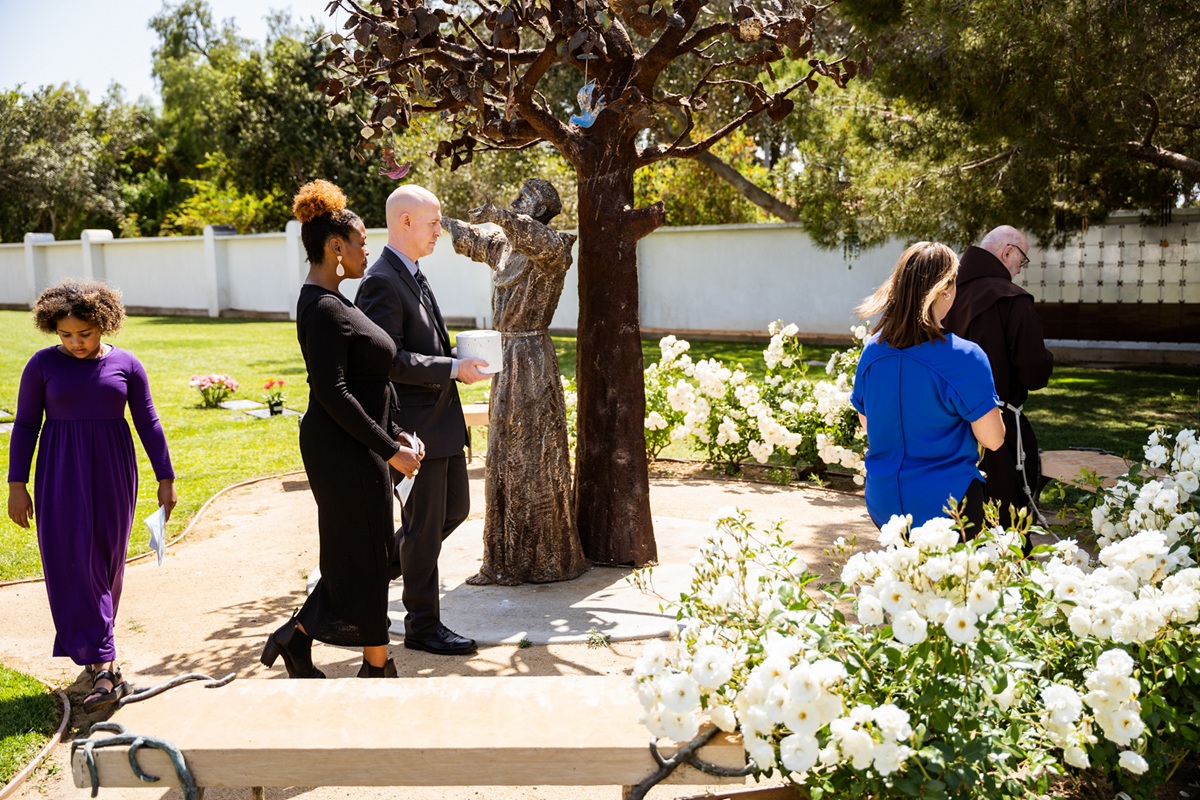
Mission San Luis Rey continues the Franciscan tradition of hospitality and compassion. Families who choose burial at the Old Mission Cemetery have access to staff who understand Catholic customs and can help coordinate committal services and pastoral care.
Spanish-speaking assistance is available for families who prefer to make arrangements in their native language.
Family Plot or Individual Burial — A Quick Comparison
| Consideration | Family Plot | Individual Burial Space |
|---|---|---|
| Purpose | Keeps relatives together under one family name and monument. | Provides a single resting place for one person or a companion burial. |
| Number of Interments | Multiple, based on lot size or mausoleum capacity. | One (occasionally two if companion burial is permitted). |
| Memorial Design | Shared family monument with individual nameplates or markers. | Independent marker or headstone, fully customizable. |
| Future Planning | Reserves space for generations; simplifies later arrangements. | Requires new purchase for each burial; flexibility if family members live elsewhere. |
| Cost Structure | Higher initial investment; lower cost per interment over time. | Lower up-front cost; separate fees for each space and service. |
| Legacy Value | Creates a single location for prayer, visitation, and family heritage. | Best for personal choice or when family members are widely located. |
| Ideal For | Families who value shared legacy and continuity. | Individuals or couples preferring a simple arrangement. |
Families unsure which option best fits their situation can schedule a conversation with cemetery staff to review available sections, mausoleum crypts or companion spaces.
Questions to Ask Any Catholic Cemetery
When exploring burial options, knowing what to ask brings clarity and confidence.
Here are key questions every family should consider:
Burial Options
- What types of spaces are available - single, companion or family plots?
- Are mausoleum crypts or niches offered?
- Can cremated remains be placed within a family lot?
Ownership and Rights
- Who holds the deed, and how can it be updated?
- What is the process for transferring burial rights?
- How are additional interments approved?
Memorials and Monuments
- What are the size and material guidelines?
- Can families use their own monument company?
- How are future engravings handled?
Fees and Care
- What does the purchase price include?
- How is perpetual care managed?
- Are pre-need payment options available?
Faith and Ceremony
- Are Catholic rites provided at the gravesite?
- Can non-Catholic relatives be buried nearby?
For families in North County San Diego, the Mission San Luis Rey Cemetery team welcomes questions at any stage of planning.
Old Mission San Luis Rey Cemetery - A Place of Faith and Continuity
Since 1798, the cemetery at Mission San Luis Rey has provided a sacred resting place for families throughout North County San Diego. Set beside the historic Mission Church, the grounds reflect centuries of Franciscan care and Catholic tradition while welcoming all people of good will.
Every burial is guided by the Mission’s values of dignity, hospitality and reverence for creation.
Families may choose from single graves, family lots or mausoleum spaces, each maintained through perpetual care. Spanish-speaking staff are available to assist with burial arrangements and questions about Catholic rites, pre-planning and interment options.
Visitors often note the sense of continuity that surrounds the Mission grounds, generations remembered together in a place where faith and care remain constant.
The Mission Cemetery team provides guidance with compassion, clarity and respect for every family’s story. To learn more or schedule a consultation, visit the Mission San Luis Rey Cemetery page or call our staff at (760) 231-8445.
Frequently Asked Questions
Practices may vary by cemetery. For the most current policies, availability and fees, please contact the Mission San Luis Rey Cemetery office directly.