
St. Francis of Assisi Life, Beliefs and the Franciscan Legacy
St. Francis of Assisi was a significant figure in medieval religious history, whose life and teachings helped shape a new understanding of Christian practice in the early thirteenth century. Born into a wealthy family in the Italian town of Assisi, he ultimately rejected the expectations of his social class, choosing instead a life devoted to simplicity, service, and communal living. His choices influenced not only those who followed him during his lifetime, but also the development of religious communities that continue to exist today.
In this article we present a detailed historical overview of St. Francis of Assisi, examining his early life, personal transformation, beliefs and the formation of the Franciscan movement. It places Francis within the social and religious context of his time and traces how his ideas were organized, preserved and carried forward after his death. The focus remains on documented history and the legacy of his life and teachings.
Table of Contents:
Italy in the Late 12th and Early 13th Centuries
Early Life of Francis of Assisi
The Turning Point in Francis’s Life
Francis’s Commitment to Poverty and Service
The Formation of the Franciscan Brotherhood
The Franciscan Rule and Writings
Francis’s Understanding of Nature and Creation
The Final Years of St. Francis
The Growth of the Franciscan Movement After Francis
Italy in the Late 12th and Early 13th Centuries
St. Francis lived during a period of significant social and economic change in central Italy. Towns such as Assisi were part of a growing network of urban centers developed by trade, local governance and shifting relationships between social classes. The rise of merchant families created new opportunities for wealth and influence outside the traditional structures of nobility and feudal landholding.
This period was marked by frequent political tension. Italian cities often experienced internal conflict between competing factions, as well as disputes involving regional powers and the authority of the Holy Roman Empire and the papacy. Military service and local warfare were common, particularly among young men from prominent families, and participation in conflict was often linked to honor and social advancement.
Religious life in medieval Italy was also changing. The Church held a central role in daily life, but there was growing concern about the gap between religious ideals and practice. New movements emerged that emphasized preaching, personal discipline, and service to the poor. These movements reflected broader questions about how religious life should be lived within an increasingly urban and economically complex society.
It was within this environment that Francis of Assisi came of age. His background as the son of a prosperous merchant placed him at the intersection of traditional expectations and emerging social realities. Understanding this historical context helps explain why Francis’s decisions stood out and why his approach to religious life resonated with others during his lifetime.
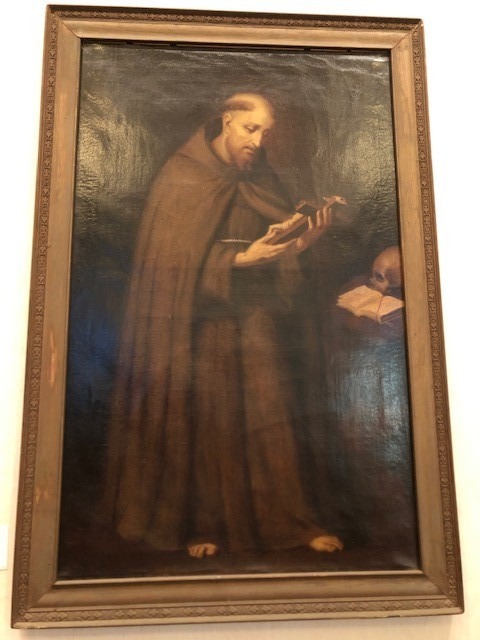
St Francis Painting at Old Mission Museum
Early Life of Francis of Assisi
Family Background and Upbringing
Francis of Assisi was born around 1181 or 1182 in the town of Assisi, located in what is now central Italy. His father, Pietro di Bernardone, was a successful cloth merchant whose work involved travel and trade. Francis grew up in a household that benefited from the economic opportunities available to merchant families at the time.
As a young person, Francis received an education appropriate for his social position. He was familiar with commerce, social customs and the expectations placed on sons of prosperous families. Contemporary accounts describe him as sociable and interested in public life, with ambitions consistent with the values of his environment.
Youth and Early Ambitions
In his youth, Francis pursued status and recognition within his community. Like many young men of similar background, he was drawn to the ideals of honor associated with military service. In 1202, Francis took part in the conflict between Assisi and Perugia and was captured, spending close to a year in captivity.
Following his release, Francis experienced a period of illness that limited his activities for an extended time. During this period, he began to question earlier ambitions and expectations. Although the change was gradual, this phase marked the beginning of a shift away from his former goals and toward a different understanding of purpose and responsibility.
The Turning Point in Francis’s Life
Illness, Reflection and Changing Priorities
After his release from captivity and return to Assisi, Francis experienced ongoing health problems that limited his ability to resume earlier pursuits. This period created distance from the social life and ambitions he had previously valued. Contemporary sources suggest that he spent increasing time in reflection and reassessment, questioning the goals that had once defined success for him.
During this time, Francis began to redirect his attention toward religious practice and acts of charity. He associated less with former companions and more with individuals living on the margins of society.
Public Renunciation and Break with Family Expectations
A decisive moment came when Francis chose to separate himself publicly from his family’s expectations and economic support. According to early accounts, he renounced his inheritance and returned property to his father in a public setting. This act signaled a clear departure from his former life and social position.
The renunciation had significant consequences. Francis no longer had the protection or status associated with his family’s wealth and was viewed by many in Assisi as having abandoned conventional responsibilities. From this point forward, he committed himself to a way of life marked by simplicity, reliance on alms and service among the poor.
This transition marked the beginning of Francis’s independent religious path and set the foundation for the community that would later form around him.
Francis’s Commitment to Poverty and Service
After his public renunciation, Francis adopted a way of life that rejected personal ownership and emphasized dependence on daily provision. Poverty, as Francis understood it, was not simply the absence of possessions but a deliberate choice to live without claims to property, status or privilege. This approach distinguished him from both wealthy laypeople and established monastic communities.
Francis supported himself through manual labor when possible and relied on alms when necessary. He devoted time to caring for the sick, assisting the poor and repairing neglected churches in and around Assisi. These activities were practical expressions of his commitment and placed him in direct contact with people who lived outside the protections of wealth and social rank.
Francis supported himself through manual labor when possible and relied on alms when necessary. He devoted time to caring for the sick, assisting the poor, and repairing neglected churches in and around Assisi. These activities were practical expressions of his commitment and placed him in direct contact with people who lived outside the protections of wealth and social rank.
His understanding of service emphasized active engagement in daily life, including direct contact with people in towns and rural areas. This outward-facing approach would later become a defining characteristic of the Franciscan way of life.
Francis’s commitment attracted attention from others who were drawn to his manner of living. As companions began to join him, his personal choices developed into a shared form of religious life, setting the stage for the formation of a new religious community.
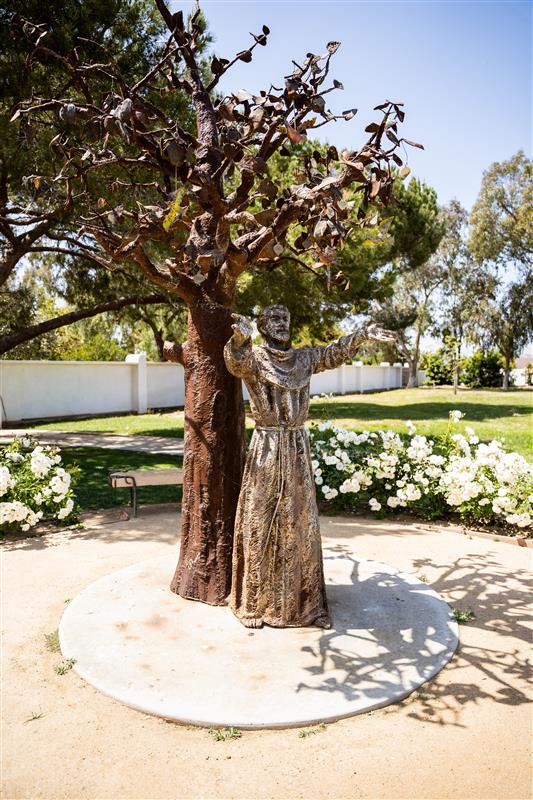
St francis tree at Mission San Luis Rey
The Formation of the Franciscan Brotherhood
As Francis’s way of life became more visible, others began to join him. These early companions were drawn to his commitment to simplicity, service and communal living. They did not initially form a formal organization but lived together according to shared practices centered on poverty, work and preaching.
The growing group gathered around Francis in and around Assisi. They shared daily routines, supported themselves through manual labor and alms and traveled to nearby towns to speak publicly about their way of life. Their activities placed them in regular contact with local communities and distinguished them from monastic groups that lived apart from urban centers.
As the number of followers increased, questions arose about structure, authority and recognition. Francis and his companions sought guidance from Church leadership to clarify their status and ensure that their way of life aligned with established religious norms. This led Francis to travel to Rome to present their form of life for approval.
Early approval from Pope Innocent III (traditionally dated to 1209) allowed the brotherhood to operate with recognized standing within the Church. While the community remained committed to simplicity, recognition introduced new responsibilities and the need for clearer organization as the movement expanded.
The Franciscan Rule and Writings
As the Franciscan brotherhood grew, the need for clear guidance became more pressing. Francis responded by outlining a way of life that reflected the practices already being lived by the community. This guidance later became known as the Franciscan Rule.
The Rule sets out expectations for daily living, including communal life, work, preaching and reliance on alms. It emphasized humility, obedience within the community, and a commitment to living without personal property. The Rule was not intended as a theoretical document but as a practical framework that supported the brothers’ shared life.
Francis also wrote letters and short texts addressed to members of the brotherhood and to a wider audience. These writings focused on conduct, responsibility and relationships within the community. They reveal a direct and practical style of communication, concerned with how principles were applied in everyday situations.
Together, the Rule and Francis’s writings helped provide continuity as the movement expanded. They allowed communities in different regions to follow a common form of life while remaining connected to the original intentions of the brotherhood. These texts continue to be important historical sources for understanding Francis’s approach to religious life and community organization.
Francis’s Understanding of Nature and Creation
Francis of Assisi expressed a strong sense of connection to the natural world, which appeared in his language, actions and writings. This perspective reflected broader medieval religious thought, which understood creation as ordered and meaningful within a religious framework. Francis’s views were grounded in his understanding of humanity’s place within that order.
Francis regarded the natural world as something to be treated with respect and care. He spoke and wrote about animals, plants and natural elements in ways that emphasized relationship and responsibility instead of control or exploitation. These ideas were expressed through religious language common to his time and should be understood within that historical context.
Later generations have often highlighted Francis’s relationship with nature, sometimes interpreting it through modern concerns. Historical sources show that his views were closely tied to religious belief and daily practice, not to environmental philosophy as it is understood today. His approach reflected a broader commitment to humility and restraint in how people related to the world around them.
Francis’s understanding of creation was therefore part of his wider approach to religious life. It reinforced his emphasis on simplicity, responsibility, and attentive engagement with everyday experience, themes that also influenced his relationships with people and communities.
The Final Years of St. Francis
In the later years of his life, Francis experienced significant physical decline. Ongoing illness and the effects of a demanding lifestyle limited his ability to travel and participate fully in the activities of the growing brotherhood. During this period, responsibility for daily leadership increasingly shifted to others within the community.
Despite declining health, Francis remained engaged with the movement he had helped establish. He continued to offer guidance through correspondence and personal encounters when possible. His concern during these years focused on preserving the original spirit of the brotherhood as it expanded across regions and adapted to new circumstances.
Francis spent much of his final period in or near Assisi. He died in 1226 at the age of approximately forty-four. His death prompted widespread attention, and accounts of his life and actions circulated soon after. He was canonized on July 16, 1228.
The years following his death marked a transition from a community closely associated with its founder to an established religious order. The challenges of growth and organization became central concerns as Francis’s ideas were carried forward by others.
The Growth of the Franciscan Movement After Francis
After Francis’s death, the community he had founded continued to expand across Italy and into other parts of Europe. The Franciscan way of life attracted large numbers of followers, and new communities were established in towns and cities where preaching and service were needed.
As the movement grew, increased organization became necessary. Leadership structures developed to coordinate activities, oversee communities and maintain consistency across regions. Written guidelines and administrative roles became more important as the number of friars increased and the geographic reach of the order widened.
During this period, different expressions of Franciscan life began to emerge. While all branches shared a common origin in Francis’s teachings, they responded differently to questions about community life, discipline and engagement with the wider world. These developments addressed practical needs while remaining connected to Francis’s original intentions.
The expansion of the Franciscan movement ensured that Francis’s ideas continued to influence religious life well beyond his lifetime. By the mid-thirteenth century, Franciscan communities had spread widely across Europe.
The Legacy of St. Francis Today
St. Francis of Assisi remains an influential figure in religious and historical study due to the lasting impact of his life and ideas. The communities that developed from his example continue to operate in many parts of the world, adapting to different cultural and social contexts while maintaining core elements of Franciscan life.
Francis’s emphasis on simplicity, service and community has informed approaches to religious practice, education, and social engagement across centuries. His writings and the Rule attributed to him remain central reference points for understanding the origins and development of the Franciscan tradition.
Beyond religious communities, Francis’s life is frequently examined by historians as an example of how individual action can contribute to broader social and institutional change. His response to the conditions of his time offers insight into medieval religious movements and the ways they interacted with urban society, economic change and church authority.
The continued study of St. Francis reflects the enduring relevance of his life within historical scholarship. His legacy is preserved through texts, institutions and material culture that document how his ideas were interpreted and carried forward after his death.
Franciscan History at Mission San Luis Rey
The history of Mission San Luis Rey is closely connected to the Franciscan tradition established by St. Francis of Assisi. Franciscan friars were among the primary religious orders involved in the California mission system, bringing with them forms of religious life shaped by Francis’s teachings and the organizational structures that developed after his death.
Mission San Luis Rey Museum provides historical context for understanding how Franciscan ideas were carried into new regions and adapted to different historical circumstances. Museum exhibits, artifacts and archival materials document the presence of Franciscan friars and illustrate how their religious practices, daily routines and administrative responsibilities were recorded over time.
Museum resources help place St. Francis within a broader historical framework, showing how his legacy extended beyond medieval Italy and influenced institutions that developed centuries later. Through historical interpretation and preserved materials, visitors can better understand how Franciscan life and values were transmitted, adapted and maintained across different eras and locations.