The History and Mission of the Franciscan Friars
Franciscan friars are members of a religious order that began in the early thirteenth century through the leadership of St. Francis of Assisi. Known formally as the Order of Friars Minor, the Franciscan movement developed into one of the most widespread friar communities in Europe and beyond.
This article explains who the Franciscan friars are, how the order developed after its founding and how it has been organized across centuries. It examines the meaning of the name “Friars Minor,” outlines the structure of the Franciscan Order, and offers context for understanding the Franciscan presence in places such as Mission San Luis Rey.
Origins of the Franciscan Order
The Franciscan Order began in the early thirteenth century in Assisi, Italy. St. Francis gathered a small group of companions who chose to live in community according to a shared rule of life. This group later became known as the Order of Friars Minor.
In its earliest stage, the brotherhood had no elaborate structure. Members lived simply, relied on manual labor and alms and traveled to preach in nearby towns. As the number of friars increased, Francis sought formal recognition from Church authorities. Early approval from Pope Innocent III, traditionally dated to 1209, allowed the community to operate openly within the Church.
The name “Order of Friars Minor” reflects the identity the early brothers adopted. The term “minor” signaled a commitment to humility and service rather than social status. It expressed how the friars understood their place within society and within the Church.
After Francis’s death in 1226, the order continued to expand across Europe. Growth required clearer organization and written guidelines to maintain consistency across regions. Leadership roles developed to coordinate communities, oversee formation and preserve the principles outlined in the Franciscan Rule.
By the mid-thirteenth century, Franciscan friars had established communities across much of Western Europe. Their communities became established parts of urban religious life, known for preaching, pastoral care and education.
The Meaning of “Friars Minor”
The official name of the Franciscan Order is Ordo Fratrum Minorum, which translates to “Order of Friars Minor.” Each part of the name carries historical meaning.
The term “friars” identifies the members as brothers who live in community under a shared rule. It emphasizes fraternity instead of hierarchy. This reflected Francis’s desire for a community bound by mutual responsibility rather than social rank.
The word “minor” requires explanation. In medieval society, the term referred to those considered lesser in status or power. Francis adopted the term intentionally. He instructed his followers to regard themselves as the “lesser brothers” within society and within the Church. The title expressed a posture of humility and service instead of authority.
The name also distinguished the Franciscans from established religious communities that held property or operated large monastic institutions. By identifying as “Friars Minor,” the early Franciscans signaled a commitment to simplicity, communal dependence and engagement with ordinary people.
Over time, the name remained central to Franciscan identity. Even as the order developed formal structures and expanded geographically, the title continued to reflect the original understanding of community life and service.
Growth and Expansion in the Thirteenth Century
After receiving early recognition from Church authorities, the Franciscan Order expanded quickly across Italy and into other parts of Europe. Young men joined the friars in significant numbers, and new communities formed in major towns and cities.
By the 1220s and 1230s, Franciscan friars had established houses in France, Spain, England and parts of Central Europe. Urban centers provided opportunities for preaching, education and pastoral care. The friars’ presence in cities placed them in regular contact with merchants, artisans and university students.
Expansion required clearer organization. The order divided into provinces to manage regional communities. Each province had a minister responsible for oversight, while a Minister General served the order as a whole. These roles helped coordinate travel, maintain discipline and preserve unity across growing distances.
The Franciscans also developed a strong presence in emerging universities. Friars studied theology and participated in academic life, which increased their influence within the Church. This engagement strengthened the order’s intellectual foundation and expanded its role beyond local preaching.
Rapid growth created internal debates about poverty, property and administration. Leaders sought ways to remain faithful to Francis’s intentions while addressing practical realities. These discussions influenced the development of the order throughout the thirteenth century and contributed to the formation of distinct branches in later centuries.
Organization of the Franciscan Order
As the Franciscan Order expanded, it required a stable structure to maintain unity across regions. The order developed a system of governance that balanced local community life with broader coordination.
At the international level, the Minister General serves as the head of the order. This role includes oversight of the global community, guidance in interpreting the Rule and coordination among provinces. The Minister General works with a council that assists in major decisions and long-term planning.
The order divides into provinces, which correspond to geographic regions. Each province has a Provincial Minister who oversees friaries within that region. Provincial leadership addresses formation, assignments and local administration.
Individual friaries function as the basic unit of Franciscan life. Friars live together in community under a local superior, often called a Guardian. The friary provides a structure for daily prayer, work and service within the surrounding community.
This organizational framework allows the Franciscan Order to operate internationally while maintaining local presence. It supports mobility, shared identity and continuity with the Rule established in the early years of the movement.
Branches of the Franciscan Order
Over time, differences in interpretation and administration led to the development of distinct branches within the Franciscan tradition. While all branches trace their origins to St. Francis of Assisi and share the Franciscan Rule, they operate as separate entities within the broader Franciscan family.
- The largest branch is the Order of Friars Minor (OFM). This group continues the general Franciscan tradition and serves in parishes, schools, missions and other forms of public ministry across the world.
- The Order of Friars Minor Conventual (OFM Conv.) developed as a distinct branch with its own governance and community structures. Conventual Franciscans often serve in established urban settings and maintain historic Franciscan institutions.
- The Order of Friars Minor Capuchin (OFM Cap.) emerged in the sixteenth century as a reform movement within the Franciscan tradition. Capuchins sought a return to simpler forms of community life and visible signs of poverty. Today, they operate globally and are known for pastoral and missionary work.
Although these branches differ in governance and certain practices, they share a common foundation in the life and teachings of St. Francis. Each branch maintains communal living, adherence to the Franciscan Rule and active service among the public.
Daily Life of Franciscan Friars
Franciscan friars live in community within friaries located in cities, towns and mission areas. Each friary functions as a shared residence where members follow a common rhythm of prayer, meals, work and meetings. Community life forms the foundation of Franciscan identity.
Daily prayer includes communal worship and personal devotion. Friars gather at scheduled times for common prayer and participate in the sacramental life of the Church. These practices provide structure and continuity within the community.
Work varies depending on location and assignment. Many Franciscan friars serve in parishes, schools, retreat centers or mission territories. Others work in administration, education or social service. Assignments are made within the structure of the province and reflect the needs of the region.
Franciscan life includes shared responsibility for household tasks and community decisions. Friars meet regularly to discuss practical matters, financial stewardship and pastoral commitments. Leadership roles within a friary coordinate daily operations but do not replace communal participation.
Mobility remains an element of Franciscan life. Friars may receive new assignments and relocate to different communities within a province or beyond. This structure supports flexibility and allows the order to respond to changing needs across regions.
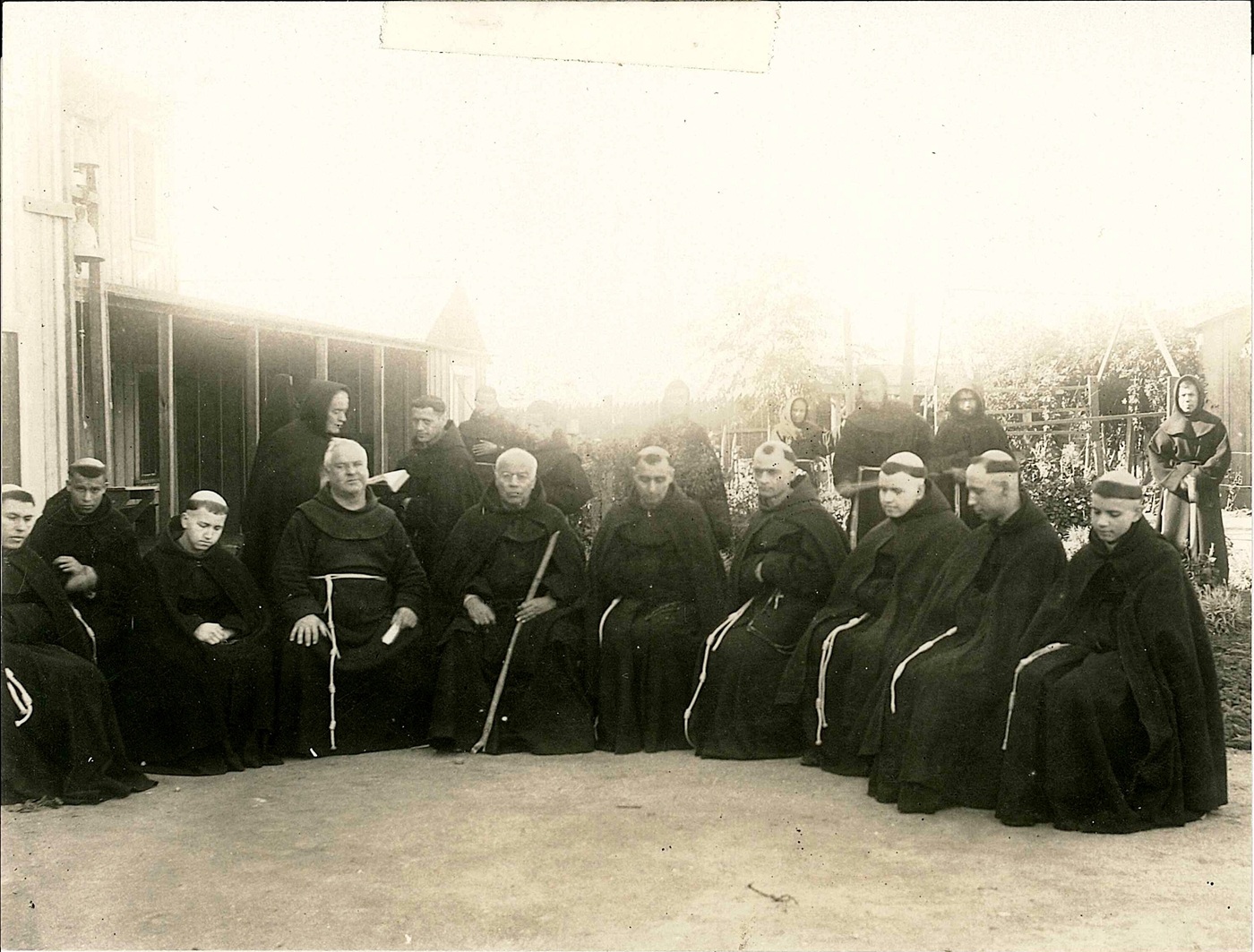
Group of Friars - MSLR Archive
Franciscan Friars in Mission History
Franciscan friars played a significant role in missionary activity during the early modern period. Beginning in the fifteenth and sixteenth centuries, Franciscan communities participated in efforts to establish missions in parts of the Americas, Asia and Africa. These activities occurred within broader political and colonial frameworks that shaped how missions operated.
Franciscan friars were the primary religious order responsible for administering the Alta California mission system under Spanish rule. Friars oversaw religious instruction, maintained sacramental records and managed daily operations within mission communities. Their responsibilities combined pastoral duties with administrative oversight.
The mission system reflected the structures of the Franciscan Order while also adapting to local conditions and colonial governance. Friars in California functioned within the same Franciscan tradition that began in medieval Italy, but their work unfolded in a distinct historical setting.
Mission San Luis Rey, founded in 1798, became one of the largest missions in Alta California. Franciscan friars served there in religious and administrative roles and their activities were recorded in baptismal, marriage and burial registers that remain important historical sources today.
Franciscan History at Mission San Luis Rey
The Old Mission Museum at Mission San Luis Rey preserves materials related to Franciscan friars and the mission era. Archival documents, liturgical objects, and interpretive exhibits provide historical context for understanding the presence of the Franciscans in California.
Museum collections help explain how the Franciscan Order functioned within the mission system and how its structures adapted over time. These resources place local mission history within the broader history of the Franciscan tradition.
Through preserved records and material culture, visitors can examine how Franciscan friars lived, worked and administered religious communities in a specific historical context.