
The Difference Between Friars and Monks
Friars and monks are often grouped together under the broad category of religious life, yet they developed in different historical periods and served distinct roles within Christian communities. Both live in structured religious communities and follow established rules, but their settings, daily work and organizational models differ in important ways.
Text below explains the historical development of monastic life and the later emergence of friars. It examines where monks and friars lived, how they organized their communities and the types of work they carried out. The goal is to clarify the differences in context and practice while acknowledging the similarities that connect both forms of religious life.
Historical Origins
The Emergence of Monastic Life
Monastic life began in the early centuries of Christianity. By the third and fourth centuries, individuals in regions such as Egypt and Syria withdrew from urban centers to pursue disciplined lives of prayer and ascetic practice. These early figures, often referred to as the Desert Fathers, laid the foundations for organized monastic communities.
Over time, monastic life developed into structured communities governed by written rules. One of the most influential was the Rule of St. Benedict in the sixth century. Benedictine monasteries emphasized stability, communal prayer, manual labor and study. Monks typically remained attached to a single monastery for life, and their communities often maintained agricultural lands and self-sustaining estates.
The Later Development of Friars
Friars emerged much later, during the late twelfth and early thirteenth centuries. Their development coincided with the growth of towns and the expansion of urban populations in Europe. New social conditions created demand for preaching, pastoral care and religious instruction within cities.
Orders such as the Franciscans and Dominicans formed during this period. These communities organized themselves for mobility and public engagement. Unlike monks, friars established houses within towns and interacted directly with urban populations.
The difference in historical origin explains many of the distinctions between monks and friars. Monastic life developed in late antiquity with an emphasis on stability and separation from urban society. Friar life arose in medieval cities with a focus on presence and engagement within everyday social structures.
Where They Lived
Monasteries and Stability
Monks live in monasteries, which are permanent religious houses organized for communal life. Historically, many monasteries were in rural areas, though some developed near towns or within city boundaries. The monastery served as a self-contained community with space for prayer, work, study and living.
Monastic life emphasizes stability. In many traditions, monks commit themselves to a specific monastery and remain there for the duration of their religious life. This stability supports continuity within the community and strengthens long-term institutional identity.
Monasteries often maintained land and buildings necessary for self-sustaining life. Agricultural work, food production and maintenance of property formed part of monastic responsibility, particularly in earlier centuries.
Friaries and Urban Presence
Friars live in friaries, which function as communal residences located within towns and cities. Friaries are typically smaller than monasteries and operate as bases for religious work carried out in surrounding communities.
Unlike monks, friars do not commit themselves permanently to one location. Assignments may change according to the needs of the order or the province. This mobility allows friars to relocate to different communities over time.
Friaries do not function as enclosed or self-sustaining institutions in the same way many monasteries historically did. Friars live in community, but their daily work takes place largely outside the residence, within parishes, schools or mission settings.
Daily Focus and Work
Monastic Prayer and Internal Work
Monastic life centers on a structured rhythm of communal prayer, often referred to as the Liturgy of the Hours. Monks gather at set times throughout the day for worship, and this schedule forms the framework of daily life within the monastery.
In addition to prayer, monks traditionally engage in manual labor and study. Agricultural work, maintenance of the monastery and scholarly activity have long been part of monastic responsibility. In many periods of history, monasteries served as centers of learning, manuscript preservation and theological study.
The focus of monastic work often remains within the monastery itself. While monks may interact with visitors or local communities, their primary commitment is to the stability and continuity of the monastic house.
Friar Preaching and Public Service
Friars also observe regular prayer in community, but their daily work extends beyond the residence. Preaching, teaching, pastoral care and service within towns form central aspects of friar life.
Friars often serve in parishes, universities, retreat centers and mission territories. Their responsibilities include religious instruction, sacramental ministry, and social outreach. Assignments vary according to the needs of the order and the region.
Because friars operate within urban settings, their schedule reflects both communal life and public responsibilities. Prayer remains central, but it takes place alongside direct engagement with the broader community.
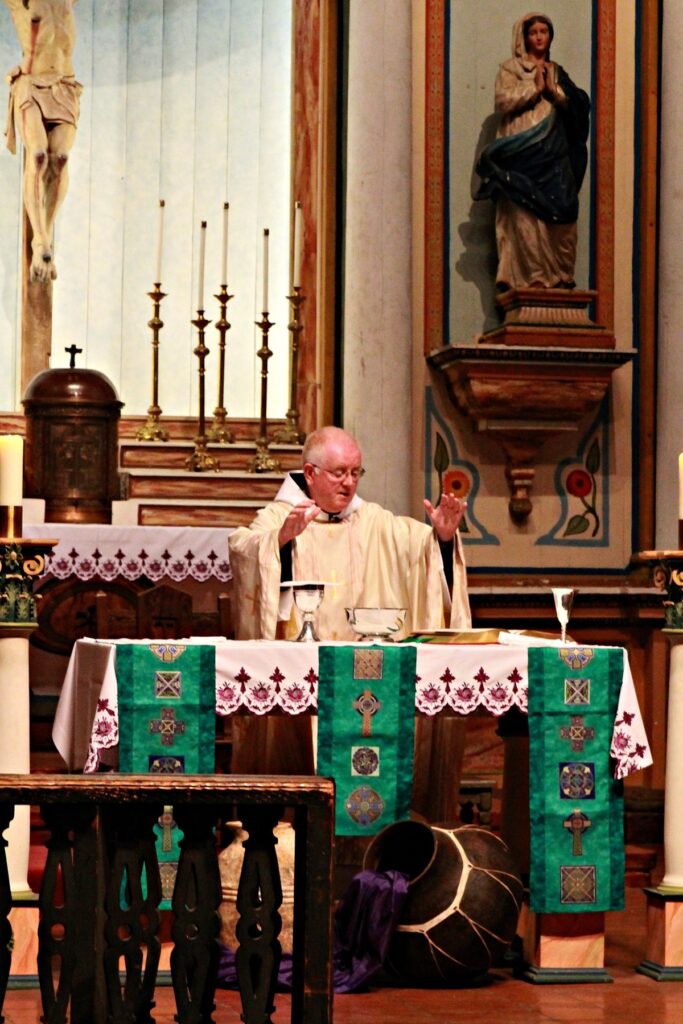
Fr. Adrian St. Paddy's Mass Oceanside Mission 2014
Poverty and Property
Monastic Ownership and Institutional Stability
Monastic communities have historically held property as part of their institutional structure. Many monasteries owned land, buildings and agricultural resources that supported the community’s long-term stability. This property did not belong to individual monks but to the monastery as a corporate entity.
Land ownership allowed monasteries to sustain themselves economically. Agricultural production, rents and donations supported daily life, maintenance of buildings and charitable activity. This system reinforced stability and permanence within a single location.
The Rule of St. Benedict and other monastic traditions emphasized communal ownership instead of personal possession. Individual monks did not own private property, but the monastery itself maintained assets necessary for its survival.
Mendicant Poverty Among Friars
Friars developed a different economic structure. As mendicants, they limited institutional ownership and avoided large agricultural estates. Their communities relied more directly on alms, donations and forms of work carried out in urban environments.
The Franciscan tradition, in particular, placed strong emphasis on communal poverty. Early Franciscans sought to avoid long-term property accumulation and large endowments. Over time, administrative arrangements developed to manage resources responsibly, but the order maintained a distinct approach to ownership.
This difference in economic structure reflects the historical environments in which monks and friars developed. Monastic communities emerged in earlier centuries when rural estates supported religious life. Friars arose in growing cities where mobility and direct contact with the public required a different model.
Similarities Between Friars and Monks
Despite important differences in history and structure, friars and monks share several foundational characteristics. Both forms of religious life are organized around community living, common prayer and adherence to an established rule.
Members of both communities commit themselves to vows that guide their conduct and responsibilities. These vows typically include poverty, chastity and obedience, though their application may differ according to the tradition and rule followed.
Communal prayer forms a central part of daily life for both monks and friars. Each community gathers at scheduled times for worship and maintains personal prayer as part of its religious discipline. This shared emphasis on structured prayer links friars and monks within the broader history of Christian religious life.
Both monks and friars also operate within larger organizational frameworks. They belong to recognized religious orders, maintain defined leadership structures and follow written rules that shape community life.
These similarities explain why friars and monks are often grouped together in public understanding. At the same time, their historical development and practical roles distinguish them in meaningful ways.
Friars in Mission History
Friars became closely associated with missionary expansion during the late medieval and early modern periods. Because friars operated within urban environments and maintained mobility, their model adapted readily to missionary assignments. Orders such as the Franciscans and Dominicans established missions in Europe and later in the Americas and other parts of the world.
In Alta California during the eighteenth century, Franciscan friars served as the primary religious order responsible for administering the mission system under Spanish rule. Their responsibilities included religious instruction, sacramental ministry and record keeping. These activities were documented in mission registers that remain important historical sources.
Mission History at San Luis Rey
Mission San Luis Rey, founded in 1798, operated within the Franciscan mission system in Alta California. Franciscan friars lived at the mission and oversaw its religious and administrative functions. Their presence reflected the broader organization of the Franciscan Order during this period.
The Old Mission Museum preserves records and material culture related to this history. Baptismal, marriage, and burial registers provide documentation of Franciscan administrative work. Liturgical objects and archival materials help explain how religious life was structured within the mission setting.
Through these preserved records and exhibits, visitors can examine how Franciscan friars functioned within a specific historical context and how their role differed from earlier monastic traditions.