The Stigmata of St. Francis
During this Jubilee Year marking 800 years since the passing of St. Francis, we reflect on his simple life of prayer, service, and brotherhood—including the profound moment when he received the stigmata, the wounds of Christ on his body.
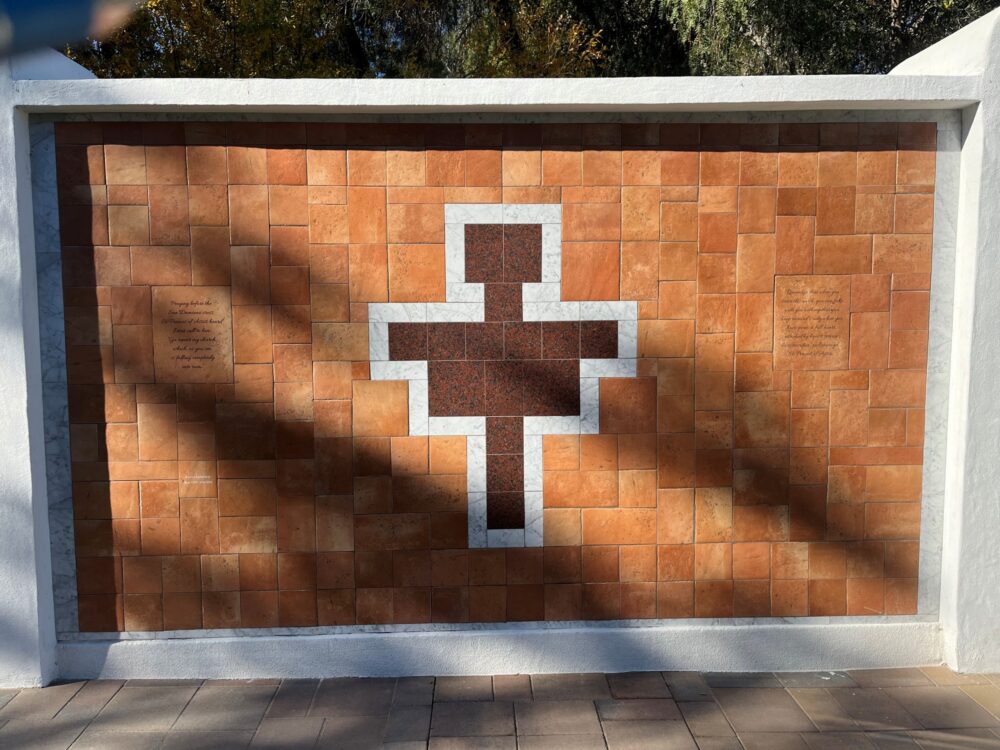
From the beginning of his conversion, Francis had a love for the passion of Christ and he wanted to experience the suffering and passion of Christ himself. Franciscan sources tell us that “the suffering of Jesus had been deeply imprinted in his mind since that day in San Damiano when the Lord spoke from the crucifix—”go and rebuild my Church.” All of his days from that time on were spent in meditation on the suffering Christ. With all his heart, Francis wanted to be beneath the cross.”
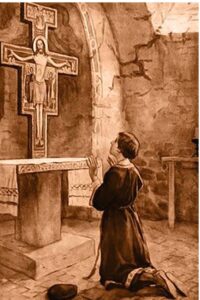
It was with this intention that Francis made his final journey to the top of Mount La Verna far to the north of Assisi. He had visited there six times beginning in 1213, when Count Orlando of Chuisi gave Francis the mountain aof LaVerna as a gift. It was one of Francis’ favorite places for prayer and solitude. The final time Francis was to come to LaVerna was in 1224, when he received the Stigmata on or about the Feast of the Holy Cross (September 14). Franciscans celebrate the Feast of the Stigmata on September 17th.
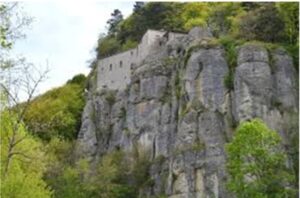
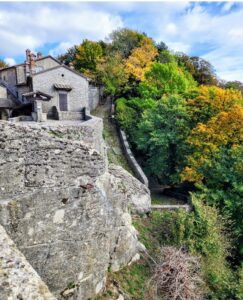
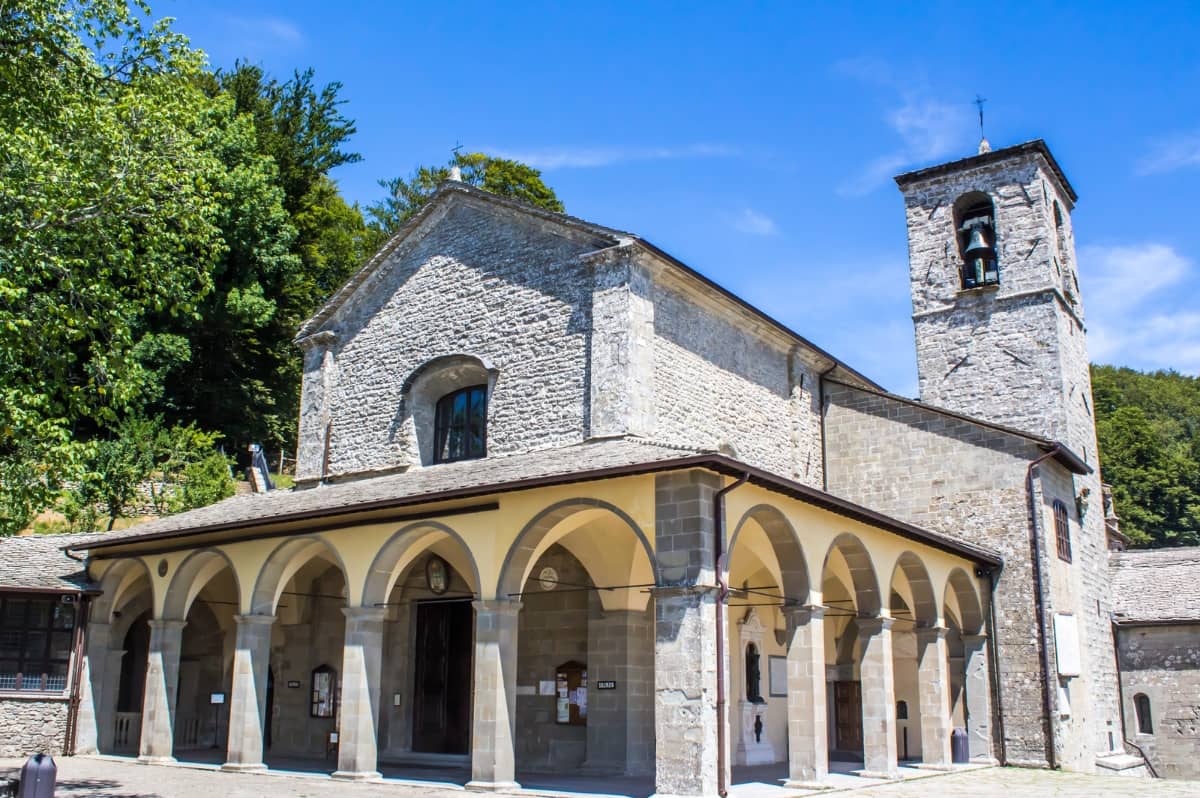
LaVerna is an extremely isolated place in a remote, forested area in central Tuscany. It is a somewhat difficult place to reach even in our times. Many people make pilgrimages to LaVerna in buses and on foot, ascending a twisting route to the mountaintop, where there is a cluster of buildings including a church, several chapels, a pilgrim hostel, and primitive caves along with a spectacular view of the surrounding valleys and mountains.
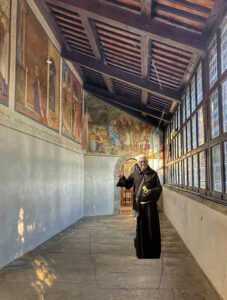
Here you can see the life of St. Francis in several beautiful frescoes in the Corridor of the Stigmata, a long, solemn hallway built to connect the main basilica to the Chapel of the Stigmata.
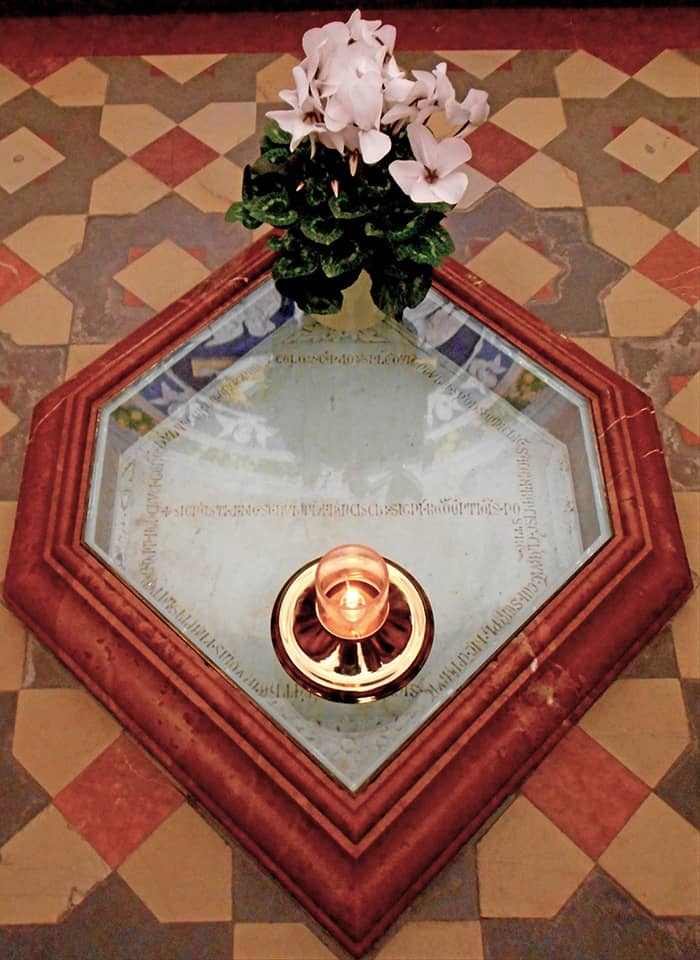
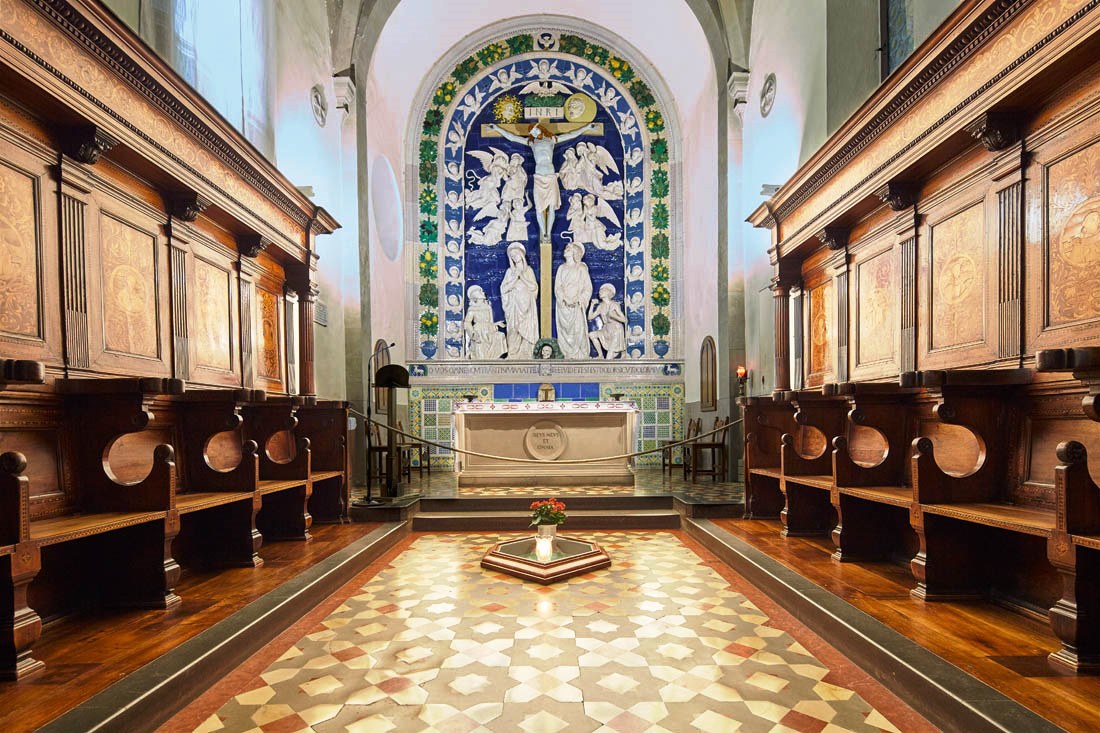
The Chapel of the Stigmata, built in 1263, has a special memorial tablet set into the floor that marks the exact spot where St. Francis received the Stigmata. The chapel also features a beautiful glazed blue and white altarpiece of the Crucifixion by Andrea della Robbia.
The LaVerna Museum is housed within 15th-century monastic rooms showcasing historic liturgical objects and art, and the old “common fire” hall where the friars gathered.
The Basilica of Santa Maria Assunta (also known as the Basilica Maggiore) is the central, grandest church within the sacred Sanctuary of La Verna complex. It is situated on a dramatic cliffside in Tuscany, Italy. The church stands as a monument of Franciscan spirituality, history, and Renaissance art and is a showcase for some of the finest works of Andrea della Robbia, a renowned Renaissance master of glazed terracotta.
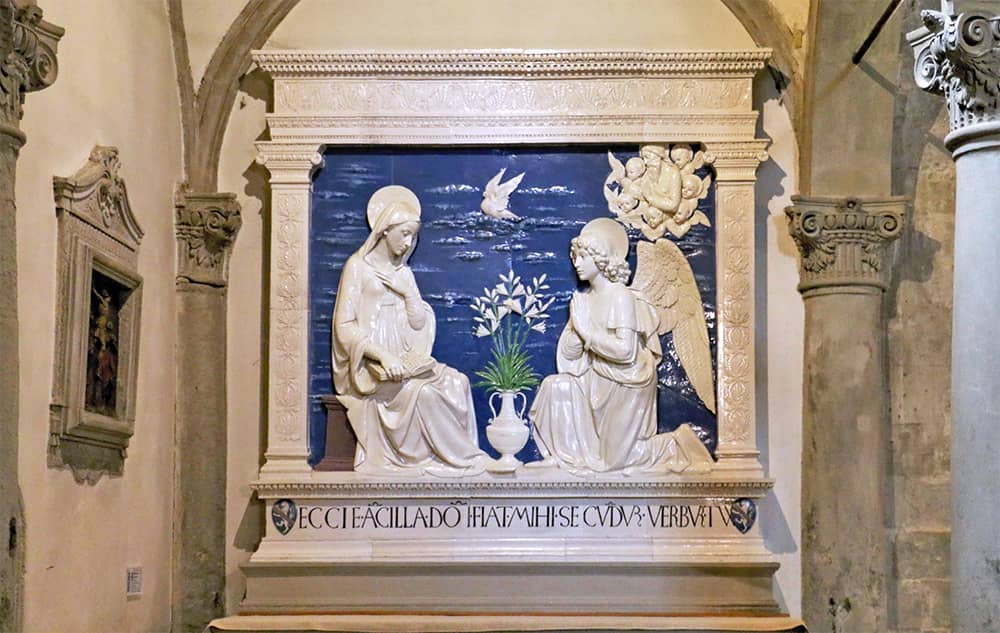
These bright, blue-and-white earthenware sculptures include, The Annunciation (1475), The Ascension, The Nativity featuring vivid depictions of the Holy Family alongside St. Francis and St. Anthony, and Our Lady of Refuge (1500–1510) an enthroned Madonna and Child surrounded by saints, located near the front entrance.
The Chapel of Relics Located inside the Basilica, preserves deeply personal items belonging to St. Francis, most notably the habit he was wearing in 1224 when he received the stigmata, alongside a remnant of his blood.
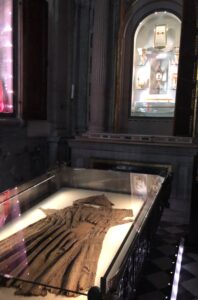
Sasso Spicco & Saint Francis’ Bed is an area where pilgrims can descend to Sasso Spicco, a massive, detached rock under which Francis prayed, and view the cold, damp stone grotto that served as his bed.
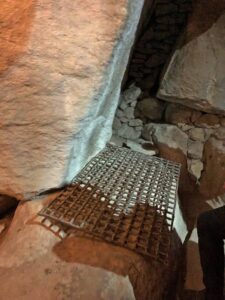
The Sanctuary at LaVerna is one of the most spiritually significant Catholic pilgrimage sites in the world. It has been managed by the Friars Minor for over eight centuries, it is universally revered as the sacred mountain where Saint Francis of Assisi received the stigmata—the wounds of Christ—on September 14, 1224. Today, it serves both as a standalone destination for spiritual retreats and as the official starting point of the Via di Francesco (Way of St. Francis), a historic walking pilgrimage that winds south from Tuscany through Umbria. This sanctuary of La Verna still captures the solitude that Francis sought 800 years ago.
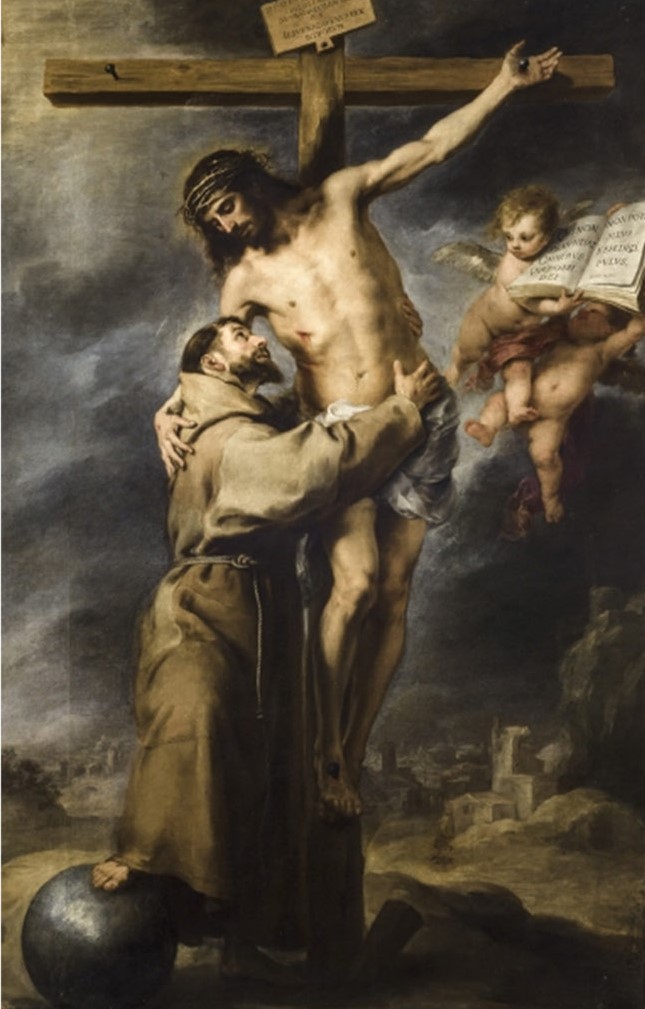
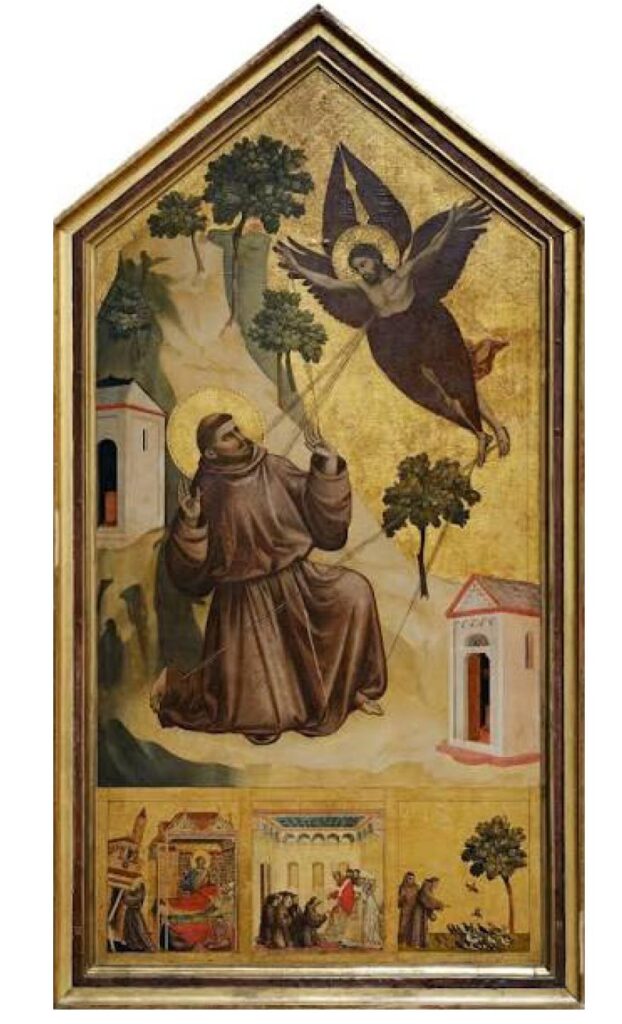
The most important event which occurred at LaVerna was the gift of the Stigmata upon the hands, feet and side of St. Francis. In his biography of Francis, St. Bonaventure tells the story of this ecstatic vision on the top of that mountain. He says: “He saw a Seraph having six wings, fiery as well as brilliant, descend from the grandeur of heaven…When the vision vanished after a mysterious and intimate conversation, it left marks on his body like those of the Crucified as if the impression of a seal had been left on heated wax. The figures of the nails were inside his hands but on top of his feet with their points extending through to the opposite side. His side too showed a blood-red wound as if it had been pierced by a lance and blood flowed frequently from it.”
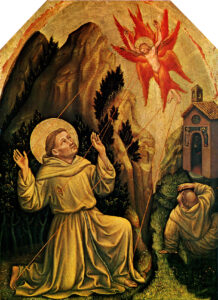
Most depictions of St. Francis show red holes in his hands and feet and a red scar on his right side (marking the place where Jesus’ side was pierced by the soldier’s lance). But as testified by eye witnesses of those who saw these wounds after Francis died, they seemed to be the form of actual nails in his hands and feet, with the nail heads one side and the rest of nails protruding on the other side.
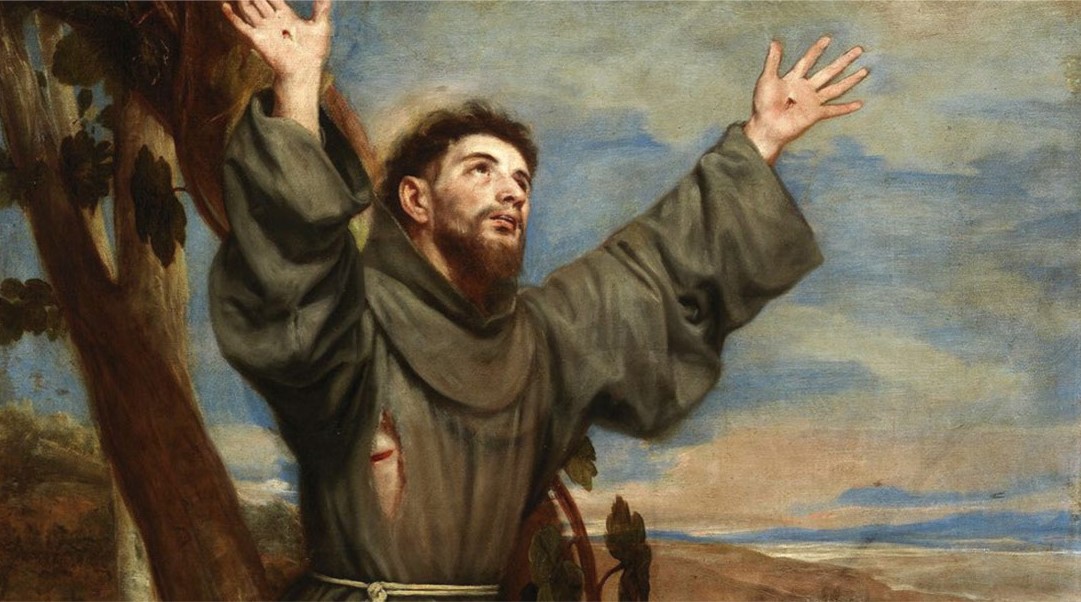
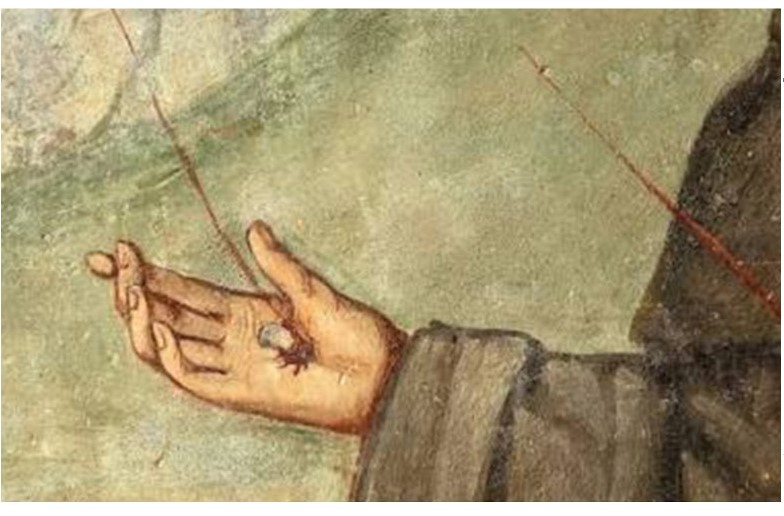
Brother Elias, who assumed leadership of the Franciscan Order after Francis’s death, described the wounds noting that “the marks on his hands and feet showed the dark appearance of nails, with heads on one side and bent points on the other. His side bore a lance wound that frequently bled, dampening his tunic.” This is one reason some thought that these could not be self-inflicted wounds, as certain skeptics asserted.
In a real way, now St. Francis fulfilled the words of St. Paul who said: “Let no one trouble me, for now I bear the brandmarks of the Lord in my body.”
Now while it truly seemed to be a seraph, Francis also saw what looked like a crucified man in the center of those wings. He was both overjoyed and frightened by this vision, and when it was over, he discovered on his body the marks of the wounds of Christ in his hands, feet and side. Francis had prayed to experience in his body and heart, something of Christ’s suffering on the cross. God answered that prayer in this unique way.