A Complete Guide to Catholic Funeral
A Catholic funeral is a sequence of prayers and rituals that accompany a person from the time the body is received into the church until burial in consecrated ground. Rooted in centuries of tradition, the Catholic funeral offers both structure and meaning - comfort for those who mourn, prayers for the departed and hope in the promise of eternal life.
Our guide walks through the complete process of a Catholic funeral, including the vigil, funeral Mass and rite of committal. It also explains Catholic teaching on burial and cremation, etiquette for those attending and cultural traditions often observed in California. At Old Mission San Luis Rey Cemetery, these rites continue to be observed in a historic Franciscan setting where faith and heritage meet.
Table Of Contents:
- Reception of the Body
- The Vigil (Prayer or Rosary Service)
- The Funeral Mass (Misa de Cuerpo Presente)
- The Rite of Committal (Burial or Entombment)
- Catholic Teaching on Burial and Cremation
- Traditions and Etiquette at a Catholic Funeral
- Pre-Planning a Catholic Funeral
- Reception and Wake vs. Vigil
- Eulogies and Words of Remembrance
- Music at a Catholic Funeral
- Length and Flow of a Catholic Funeral
- Symbols and Their Meaning
- After the Funeral: Continued Remembrance
- Catholic Funerals at Mission San Luis Rey Cemetery
- Frequently Asked Questions
Reception of the Bodyt
In many Catholic funerals, the rites begin with the reception of the body at the entrance of the church. The priest, deacon or minister greets the casket or urn and leads prayers that honor the person’s baptism and dignity.
Common Elements at the Reception
- Sprinkling with Holy Water – A reminder of baptism, when the person was first joined to Christ.
- Placing of the Pall – A white cloth is often draped over the casket, symbolizing baptismal dignity and equality before God.
- Paschal Candle – The body is usually placed near this candle, which represents the light of Christ.
Not every parish celebrates this rite in the same way, but where it is included, it sets a reverent tone for the funeral liturgy.
The Vigil (Prayer or Rosary Service)
The Vigil is often the first formal gathering of the Catholic funeral rites, usually held the evening before the Funeral Mass. It brings relatives, friends, and the parish community together to pray, hear scripture and support one another.
Purpose of the Vigil
- To pray for the soul of the deceased.
- To remember the person’s life in light of scripture.
- To provide space for mourners to share comfort and memories.
Common Practices
- Scripture and Prayer: Readings focus on God’s mercy and eternal life.
- Rosary: In many communities, the rosary is prayed as part of the Vigil.
- Words of Remembrance: Personal stories are often shared here, as the Mass itself is more focused on prayer and scripture.
Some families choose to include music or devotional elements, provided they respect the sacred setting.
Cultural Expressions
In California, the Vigil may be bilingual, with prayers and songs in both English and Spanish. For Hispanic families (ADD LINK), praying the rosary is a central tradition. Music, hymns and other cultural devotions may be included, provided they respect the sacred setting.
The Vigil prepares the community spiritually and emotionally for the Funeral Mass, reminding all present that death is faced with prayer, remembrance, and the hope of eternal life.
The Funeral Mass (Misa de Cuerpo Presente)
The Funeral Mass is the central liturgy of a Catholic funeral. It takes place in the church, with the casket or urn present, and unites the community in prayer for the deceased while proclaiming faith in the resurrection.
Structure of the Funeral Mass
- Introductory Rites: The body or cremated remains are brought to the front of the church, where they remain near the altar.
- Liturgy of the Word: Readings from scripture speak of God’s promise of eternal life. A homily follows, offering comfort and reflection in light of the Gospel.
- Liturgy of the Eucharist: The celebration of the Eucharist is central, connecting the prayer for the deceased with Christ’s sacrifice.
- Final Commendation: Incense is used as a sign of reverence, and prayers commend the person to God’s mercy.
Symbols in the Mass
- The Pall: A white cloth covering the casket, recalling the person’s baptism.
- Incense: A sign of prayer rising to God and of the dignity of the body.
- Paschal Candle: Placed nearby, symbolizing the light of Christ and the hope of resurrection.
Role of Participation
The Funeral Mass is not only for the deceased but also for the community gathered. Through scripture, song and prayer, mourners express grief while drawing strength from the Church’s faith and tradition.
The Rite of Committal (Burial or Entombment)
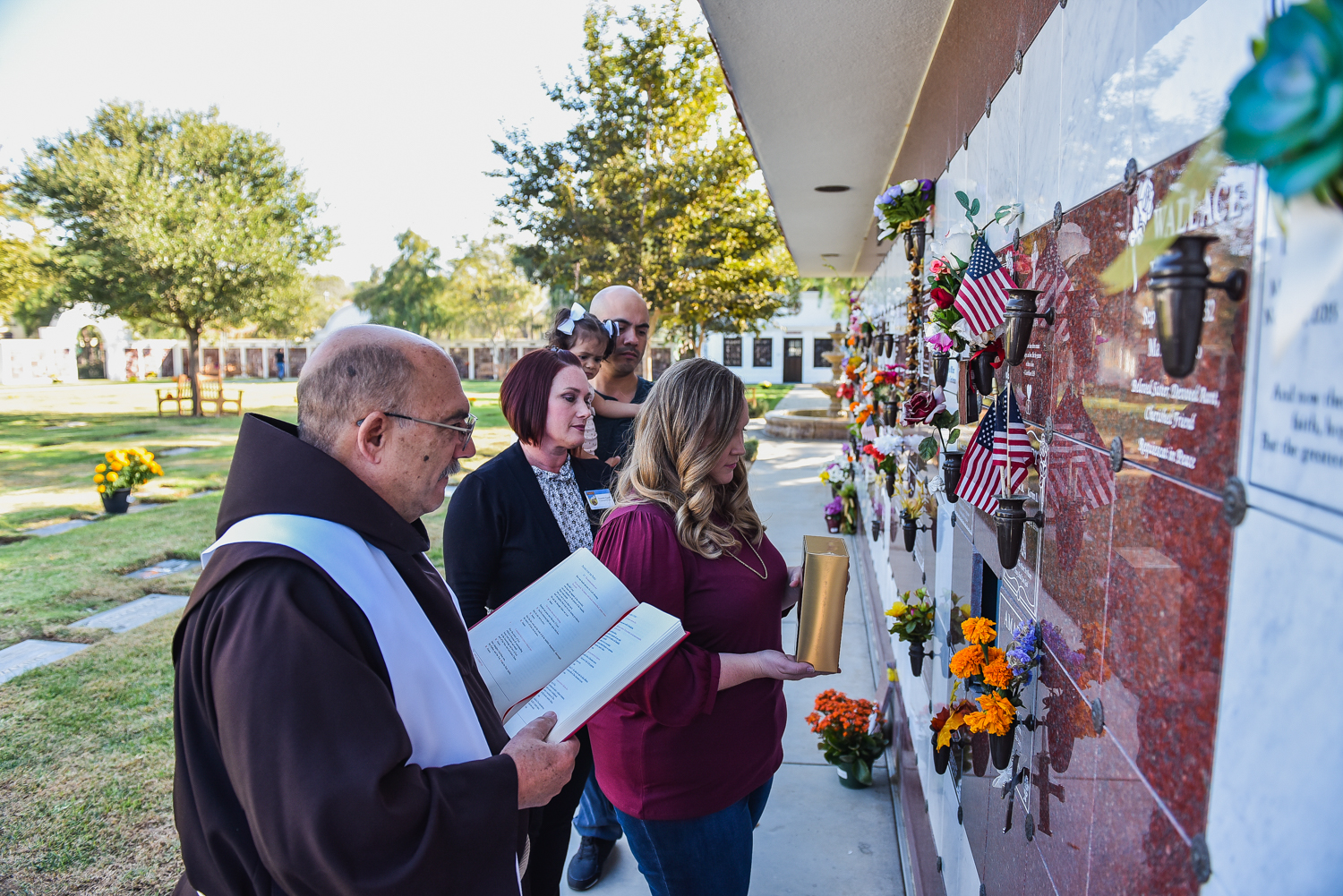
The Rite of Committal is the final moment of the Catholic funeral. It usually takes place at the cemetery, either at the graveside for in-ground burial or before a mausoleum or columbarium for entombment. This rite completes the journey begun with the reception of the body and the Funeral Mass, commending the deceased to God’s care and marking their final resting place.
Key Elements of the Committal
- Prayers of Farewell: A short liturgy led by a priest or other minister, asking God to receive the soul and give comfort to those who mourn.
- Blessing of the Grave or Crypt: Holy water is sprinkled, and the sign of the cross is made over the place of burial.
- Words of Hope: Scripture passages proclaim eternal life and the resurrection of the body.
Family Rituals
At the end of the rite, loved ones often add their own gestures of farewell, such as placing flowers, a handful of soil or small tokens of remembrance at the grave or crypt. These acts provide a tangible way to say goodbye and honor the person’s memory.
Significance
The committal is both solemn and hopeful. It acknowledges the reality of death, while affirming faith in the resurrection and the Church’s teaching that burial in consecrated ground is a sign of Christian hope.
Catholic Teaching on Burial and Cremation
For much of history, the Catholic Church permitted only burial of the body, seeing it as the most fitting way to honor the body’s dignity and express faith in the resurrection. Today, the Church allows both burial and cremation, with clear guidance for each.
Burial of the Body
- Considered the traditional and preferred option.
- Reflects the belief that the body, once a temple of the Holy Spirit, should be treated with reverence.
- Takes place in consecrated ground, usually a Catholic cemetery.
For details about available choices, see our guide to Casket Burial Options: In-Ground and Mausoleum.
Cremation
- Permitted by the Church, provided it is not chosen for reasons contrary to Christian belief.
- The Church requires that ashes be buried or entombed in consecrated ground - either in a grave, mausoleum or columbarium niche.
- Scattering ashes, keeping them at home or dividing them among family members is not permitted, as these practices do not reflect the sacredness of the human body.
To explore cremation options in more depth, read our article on Cremation Burial Options.
Spiritual Meaning
Both burial and cremation, when carried out according to Church teaching, express the same faith: that death is not the end, and that the body will be raised on the last day. The choice between them often reflects personal, cultural, or family considerations, while remaining rooted in Catholic hope.
Traditions and Etiquette at a Catholic Funeral
Attending a Catholic funeral can feel unfamiliar for those who have not experienced one before. The liturgy follows a clear structure and respectful participation shows support both for the grieving and for the faith traditions of the Church.
How the Service Unfolds
- Posture and Participation: The congregation will sit, stand and sometimes kneel at different points. If you are unsure, simply follow the lead of those around you.
- Holy Communion: Practicing Catholics who are prepared may receive Communion. Others may remain seated or come forward with arms crossed over the chest to receive a blessing.
- Language and Rituals: Scripture, hymns and prayers form the heart of the liturgy. In many communities, the rosary is prayed at the Vigil, and devotional music may be part of the Mass or committal.
Appropriate Dress
Clothing should be modest and respectful. Dark or muted tones are traditional, though the priority is reverence for the sacred setting.
Cultural Traditions
In California, Catholic funerals often include practices rooted in Hispanic heritage, such as rosary devotions, novenas following burial or music that reflects both faith and family culture. These expressions vary, but all are carried out in a spirit of prayer.
General Etiquette
- Arrive on time and silence electronic devices.
- Participate as you are comfortable, even if you are not Catholic.
- Remain attentive and respectful during prayers at the graveside or mausoleum.
Observing these customs preserves the dignity of the funeral and offers comfort to those who mourn.
Pre-Planning a Catholic Funeral
Making funeral arrangements in advance reflects both practical wisdom and Catholic values of stewardship and care. Pre-planning allows wishes to be recorded clearly, reduces financial and emotional burdens at a time of loss, and ensures the funeral follows the traditions most important to the individual and their family.
Benefits of Pre-Planning
- Clarity: Choices about burial, music and scripture are made in advance, leaving no uncertainty for loved ones.
- Financial Guidance: Planning ahead often allows today’s costs to be secured, helping avoid unexpected expenses later.
- Spiritual Preparation: Documenting funeral preferences can bring peace of mind, knowing that the funeral will reflect both faith and personal devotion.
At Old Mission San Luis Rey Cemetery, pre-planning is supported through guides, workshops and one-on-one appointments. To begin the process or learn more, visit the Funeral Pre-Planning page.
Reception and Wake vs. Vigil
The Vigil is the official beginning of the Catholic funeral rites, usually with scripture, prayers and often the rosary. By contrast, a wake or reception may follow the Vigil or take place after the funeral. The wake is a more informal time for conversation, sharing memories and offering support. Food and fellowship are common at reception, while Vigil maintains a more prayerful atmosphere.
Eulogies and Words of Remembrance
The Church encourages that eulogies and personal tributes be offered at the Vigil or at a reception, rather than during the Funeral Mass. This keeps the focus of the liturgy on scripture, prayer and the Eucharist.
A brief word of remembrance may be permitted at the end of the Mass, but this is left to the discretion of the presiding priest. Longer personal stories are best shared in the more flexible setting of the Vigil or family gathering.
Music at a Catholic Funeral
Music plays an important role in setting the tone of a Catholic funeral. Hymns that reflect Christian hope, such as Ave Maria or Be Not Afraid, are often chosen for the Funeral Mass. Cultural or personal music such as mariachi songs or favorite family hymns may be included at the Vigil, reception or even at the graveside service, as long as they respect the sacred nature of the occasion.
Length and Flow of a Catholic Funeral
- The Vigil: Often lasts 30–60 minutes, depending on whether the rosary is prayed.
- The Funeral Mass: Typically 60–90 minutes, similar in length to a Sunday Mass with additional rites.
- The Rite of Committal: Usually 15–30 minutes at the cemetery.
Altogether, the complete sequence may span two days, especially if the Vigil is held the evening before the Mass.
Symbols and Their Meaning
Catholic funerals are rich in symbols that connect the funeral to baptism and the promise of resurrection:
- Holy Water: A reminder of baptism and the cleansing power of grace.
- Pall: The white cloth covering the casket, symbolizing baptismal dignity.
- Paschal Candle: Placed near the casket, representing Christ’s light that overcomes death.
- Incense: Used at the Funeral Mass as a sign of reverence for the body and prayers rising to God.
These symbols connect the beginning of Christian life in baptism with the final journey of faith at death.
After the Funeral: Continued Remembrance
Catholic tradition does not end at the burial. Families may request a series of Masses, such as a novena in the days after death or an annual Mass on the anniversary of passing. Visiting the grave, lighting candles and praying for the deceased remain part of the ongoing expression of faith. These practices emphasize that the bonds of love and prayer continue even after death.
Catholic Funerals at Mission San Luis Rey Cemetery
Old Mission San Luis Rey Cemetery is the oldest active cemetery in North County San Diego, serving the community since 1798. Located on the historic grounds of the Mission, it continues the Franciscan tradition of welcoming people with reverence and hospitality.
Both in-ground casket burials and mausoleum entombments are available, along with niches for cremated remains. Bilingual staff guide people through every step, respecting Catholic teaching and honoring cultural traditions, including Hispanic funeral customs. Military honors, rosary services and other devotions can also be supported at the Mission.
Those who pre-plan with the Mission receive thoughtful guidance, practical resources and the assurance that their wishes are recorded in advance. The cemetery is open to all people of goodwill, making it a sacred resting place that unites faith, heritage and community.
To learn more or schedule an appointment, contact the cemetery staff:
- Cemetery Director: Danielle Napoli – (760) 231-8445
- Cemetery Associates: Monse Contreras – (760) 757-3651 140, or Mike Kraft – (760) 757-3651 ext. 139